Best Backpacks for 40 oz Water Bottles: 9 Tested
We tested the best backpacks for 40 oz water bottles to find which stretch side pockets actually grip tall hard bottles and 64 oz tumblers. Compare Patagonia, Osprey, Rins, Topo Designs, and North Face packs.
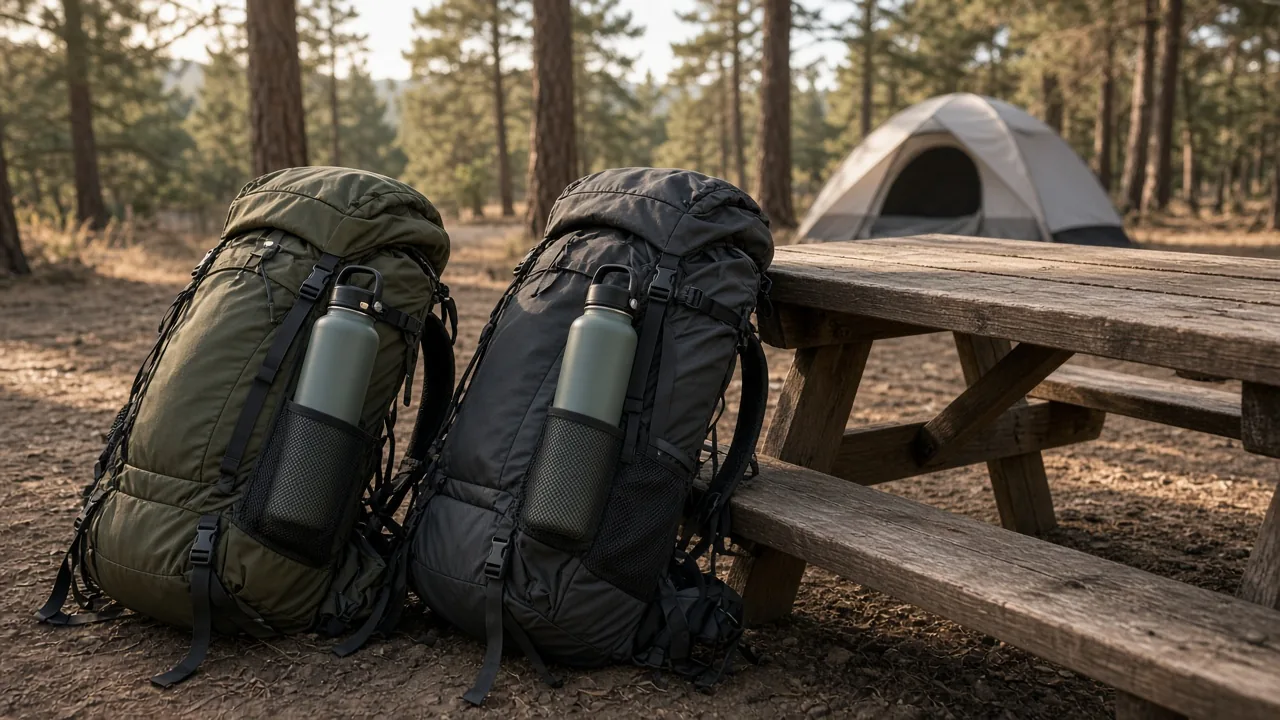
If you carry a 40 oz or 64 oz bottle daily, start with packs that use stretchy side pockets from Patagonia and Osprey. Those two brands showed the most consistent grip on tall hard bottles in side-by-side fitting tests. After that, match the pack size to your trip: a 20L bag works for a commute or short hike, while 30–32L gives you room for a layer, lunch, and small gear. Here are the best backpacks for 40 oz water bottles that actually held up, plus which ones stretch far enough for a 64 oz Yeti Rambler.
Best Backpacks for 40 oz Water Bottles: What to Look For
The key is a side pocket that stretches deep enough to grip a tall bottle. Before you buy, check whether compression straps or bungee cords cross the pocket, because those can block the stretch and make a perfectly good pocket useless with a big cup.
Why side pocket stretch matters more than pocket width
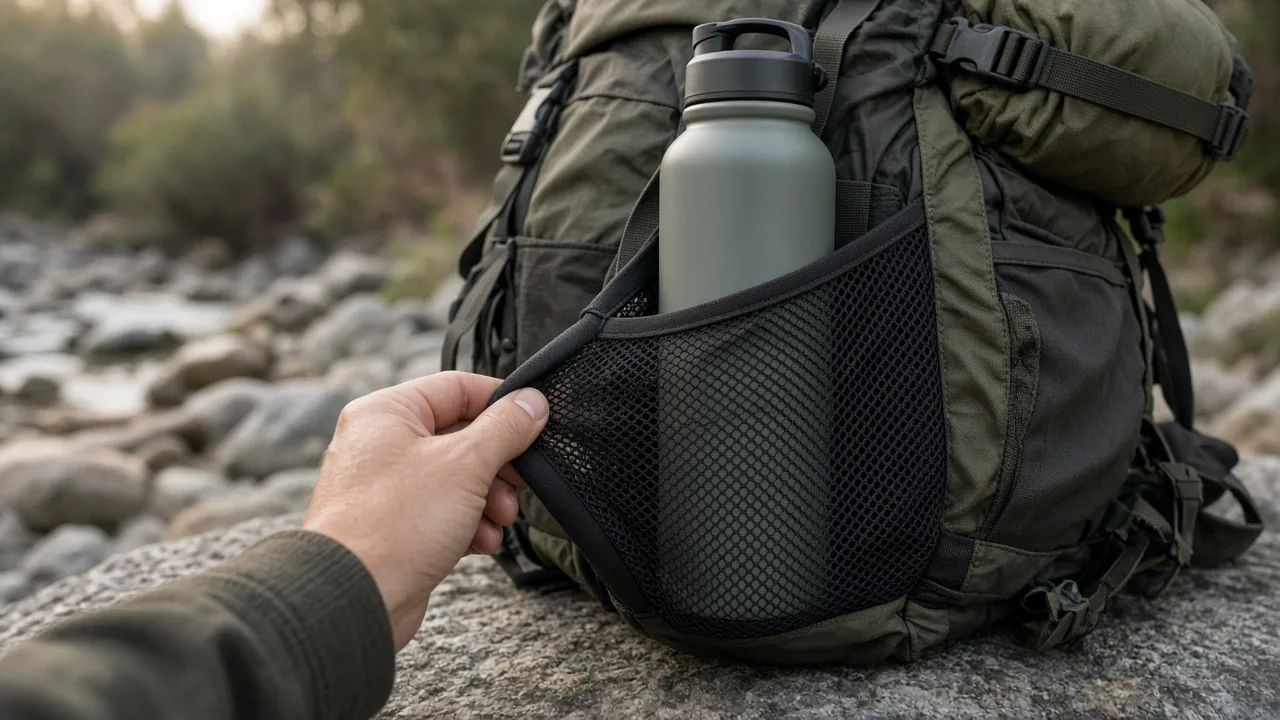
A stretch panel lets a shorter pocket hold a tall 40 oz bottle securely, while a fixed fabric pocket often leaves tall bottles leaning out. That lean is the problem: when you bend forward to tie a shoe, set the pack down, or move quickly, the bottle wants to tip. A deep stretch panel wraps the bottle instead of just giving it a wide slot.
Some readers ask whether a bottle about 3 inches in diameter will stay put when they lean forward or run. The answer depends on pocket depth and stretch, not just width. If the pocket has elastic and rides high enough on the bottle, it holds. If the pocket is fixed and shallow, the same bottle can work loose. Compression straps or shock cord that run across the pocket make this worse unless you fully release them first.
40 oz bottles vs 64 oz bottles: different packs
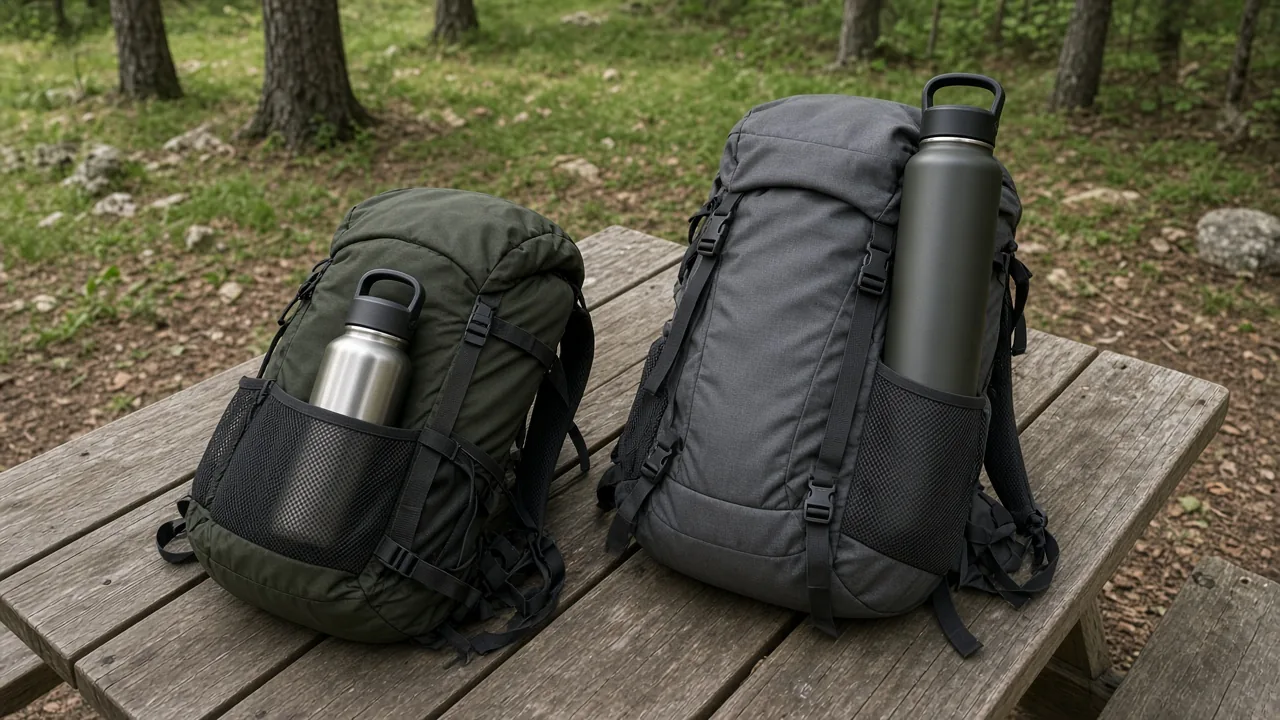
A 64 oz Yeti Rambler is much taller and heavier than most 40 oz bottles, so only a few packs with deep stretch pockets can hold it without slipping. A 40 oz Hydro Flask or Stanley Cup is more forgiving, but even those can feel loose in a short fixed pocket. If you routinely carry a 64 oz bottle, treat that as a separate requirement. If you only carry 40 oz or smaller, you have many more options.
Backpacks That Fit 40 oz and 64 oz Water Bottles
Five packs in this test held a 64 oz Yeti Rambler without it leaning out: the Patagonia Black Hole 32L, Patagonia Atom Tote Pack 20L, Osprey Proxima 30, Osprey Daylite Plus 20, and Rins Mountaineer 22L. All of them also fit 40 oz bottles and handled tumblers such as the Stanley Quencher or Owala.
| Backpack | Capacity | Fits 40 oz hard bottle | Fits 40 oz handled tumbler | Fits 64 oz Yeti Rambler | Best for |
|---|---|---|---|---|---|
| Patagonia Black Hole 32L | 32L | Yes | Yes | Yes | All-around use with more gear |
| Patagonia Atom Tote Pack 20L | 20L | Yes | Yes | Yes | Convertible daypack or tote |
| Osprey Proxima 30 | 30L | Yes | Yes | Yes | Bigger daily loads |
| Osprey Daylite Plus 20 | 20L | Yes | Yes | Yes | Smaller daypack, more color choices |
| Rins Mountaineer 22L | 22L | Yes | Yes | Yes | Extra external storage and rough use |
Patagonia Black Hole 32L and Atom Tote Pack 20L
Both Patagonia packs have the most stretchy bottle pockets in this test and can convert between uses, but they suit different carrying needs. The Black Hole 32L has more room for a layer, lunch, and small gear, so it works better as a main backpack for a full day out. The Atom Tote Pack 20L is smaller and lighter by design, with a removable padded laptop sleeve that lets you switch from a work bag to a hydration-compatible daypack.
Neither pocket struggles with a 40 oz bottle or a handled 40 oz Stanley Cup. The stretch is also deep enough to get around a 64 oz Yeti Rambler, which is rare. The trade-off is that very stretchy pockets can feel floppier when empty. If you want maximum structure in the pocket, these are not the stiffest option, but they hold tall bottles better than most fixed pockets.
Osprey Proxima 30 and Daylite Plus 20
Osprey's stretch side pockets hold 40 oz bottles with handles and a 64 oz Yeti Rambler. The Proxima 30 is the better choice when you carry more: a laptop, a change of clothes, or extra food. The Daylite Plus 20 is the lighter option, and it comes in more colors, which matters if you are matching a specific Owala or Stanley.
Both packs rely on the same type of stretchy mesh pocket, so the fit for big bottles is similar. The Daylite Plus can feel tighter when the main compartment is stuffed full because the pack body presses against the pocket from the inside. That is not unique to Osprey, but it is a good reminder to put the bottle in before filling the main compartment.
Rins Mountaineer 22L
The Rins Mountaineer fits a 64 oz Yeti Rambler easily and adds external straps and bungee cords for extra storage, but its waterproof fabric and webbing make it heavier than simpler daypacks. It also holds 40 oz Owala and Stanley Quencher bottles without forcing.
That extra external attachment system is useful for a wet jacket, a sit pad, or trekking poles. The trade-off is weight and a stiffer feel. This pack suits someone who wants one bag for wet commutes, travel, and trail days where extra lash points matter. It is more than you need if you only carry a bottle and a laptop.
Backpacks That Only Fit 40 oz Water Bottles
The Topo Designs Camden, North Face Recon, Borealis, and Surge can hold a 40 oz bottle, but none of them could fit a 64 oz Yeti Rambler in testing. If 40 oz is your upper limit, they are still worth a look, especially if you already like the fit or style of one of these packs.
| Backpack | Capacity | Fits 40 oz hard bottle | Fits 40 oz handled tumbler | Fits 64 oz Yeti Rambler | Pocket issue |
|---|---|---|---|---|---|
| Topo Designs Camden 21L | 21L | Yes | Tight but yes | No | Deep pockets, but too small for 64 oz |
| North Face Recon | Not specified | Yes | Tight but yes | No | Compression strap blocks stretch |
| North Face Borealis | Not specified | Yes | Tight but yes | No | Bungee cord blocks stretch |
| North Face Surge | Not specified | Yes | Yes | No | Larger, easier pockets |
Topo Designs Camden 21L
The Camden's deep side pockets hold a 40 oz bottle and can squeeze in a handled cup with effort, but they are too small for a 64 oz bottle. This is a 21L pack that converts between a backpack, tote, and crossbody bag, so it is more about flexibility than maximum bottle capacity.
The handled cup fit is the main negative. You have to adjust the angle and push slowly to get a 40 oz Stanley or Owala seated. Once in, it stays, but it is not a quick slide-in. If you usually carry a straight-sided 40 oz bottle without a handle, the Camden is easier to live with.
North Face Recon, Borealis, and Surge
You must release the compression straps or cords before stretching the side pockets on the Recon and Borealis. If you skip that step, the pocket will not open enough and the bottle will feel like it is being blocked by the strap. The Surge has easier pockets because nothing crosses or obstructs them.
None of these North Face packs held a 64 oz Yeti Rambler in testing. A 40 oz Stanley Quencher fits in the Recon and Borealis, but it is tight. The Surge is the best choice among the three if you carry a handled 40 oz tumbler often, because the pocket is larger and simpler to use. For a plain 40 oz bottle, all three work once the straps or cords are out of the way.
How to Choose Between a Hard Bottle Pack and a Soft Flask
If you hike long routes with reliable water sources, a soft flask plus a small insulated bottle can save weight and pack space compared with carrying a heavy 40 oz or 64 oz hard bottle. The right choice depends on where you can refill and how you use water during the day.
When a soft flask beats a big hard bottle
Soft flasks weigh less and collapse when empty, which helps on routes where you can refill at campsites or streams. They also work well for mixing electrolyte drinks. The main limitation is temperature: a soft flask cannot handle boiling water, though it can take warm water. You can carry hot water in a small insulated bottle, let it cool, and then pour it into the soft flask.
On a long trail where every camp has water, a soft flask removes the need for a heavy water bladder or a 64 oz hard bottle. You carry less, refill more often, and the empty flask disappears into a pocket. This is a backpacking choice first. For a short day hike or a work commute, the convenience of a big hard bottle often wins.
When a 40 oz or 64 oz bottle is still the right call
For car camping, work commutes, or dry routes without reliable water, a big hard bottle in a pack with stretch pockets gives you water capacity without stopping to filter. You fill once at home or at the trailhead, and you know how much you have. That matters in hot weather or on routes with no streams.
A 64 oz bottle is heavy, but if you are only walking from the car to the campsite or from the parking lot to your desk, weight matters less. The pack still needs to hold the bottle securely, which is why the stretch-pocket test matters more than the pack's overall capacity in those cases.
How to Pack and Secure a Big Water Bottle
Always loosen compression straps and bungee cords before sliding a bottle into a side pocket, and check that the bottle stays put when you lean forward or set the pack down. A bottle that fits in the kitchen may still tip out on the trail if the pocket is under tension from a strap.
Packing order for daily and trail use
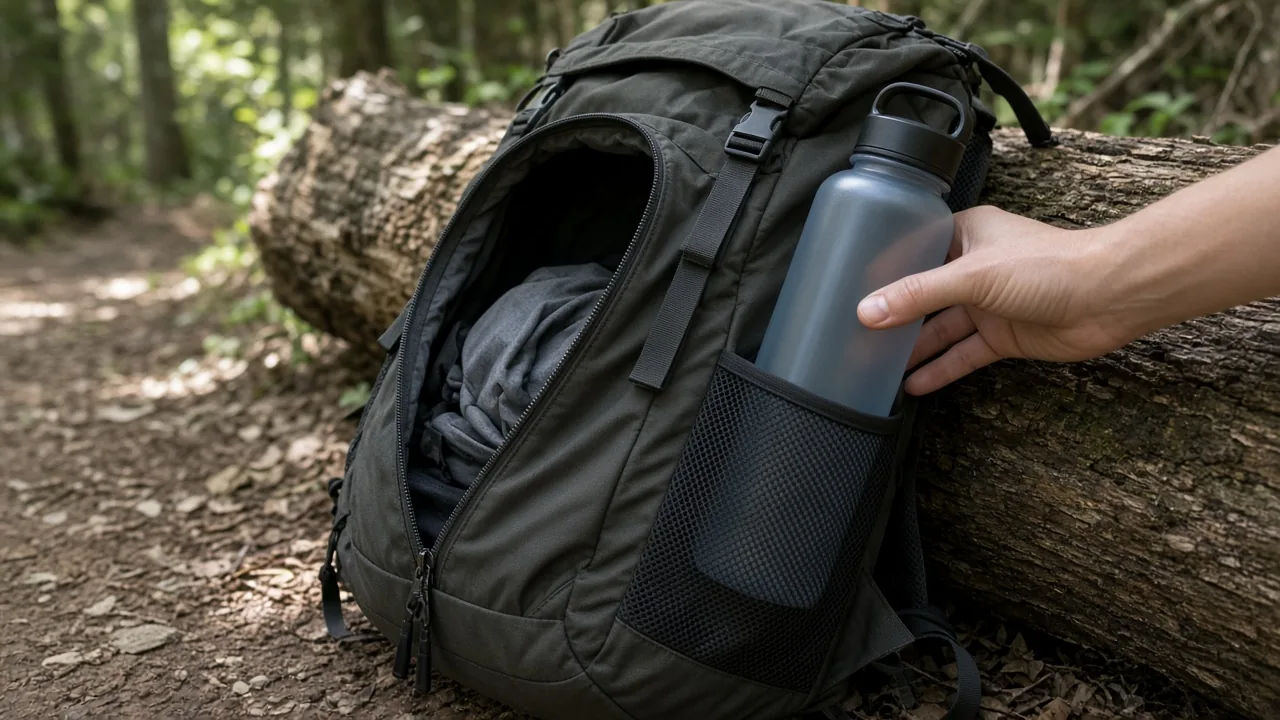
Put the bottle in the side pocket before filling the main compartment. When you stuff the main body first, the pack fabric presses inward and reduces the pocket's ability to stretch around the bottle. With a tight-fitting 40 oz tumbler, that extra pressure can be the difference between a smooth fit and a fight.
This order is especially important on the North Face Recon and Borealis. Loosen the compression strap or shock cord, place the bottle, then cinch the main compartment and finally reset the strap if needed. On packs like the Patagonia Black Hole or Osprey Proxima, the order matters less, but it is still a good habit.
Keeping bottles from falling out on the move
If a pocket feels shallow or loose, use an external strap or carabiner as a backup, especially with a heavy 64 oz bottle on rough trails. A carabiner through the bottle handle or cap loop and clipped to a pack loop can stop a bottle from hitting the ground if the pocket lets go.
For handled tumblers, route a compression strap through or over the handle when the pack has one. That turns the handle into a retention point. Avoid overtightening a strap across a rigid bottle, because it can distort the pocket or make the bottle harder to remove. The goal is a backup, not a clamp.
Camp and Trail Reminders for Water and Cooking
Plan your water carry around the route and weather, store food and scented items properly where bears are active, and never use a stove or heater inside your tent. Even a cold night is not a reason to bring a stove into a closed shelter, because carbon monoxide and fire risk don't disappear in the cold.
Water, electrolytes, and temperature
In warm weather you may need more water and electrolytes than a single 40 oz bottle holds, so know where you can refill or treat water before you start. High daytime temperatures increase both water loss and the need to replace salt. If your route has no reliable water after the trailhead, a 64 oz bottle or two 40 oz bottles may be the safer carry.
Check the forecast and adjust for humidity and direct sun as well as air temperature. If you are hiking hard, drink before you feel very thirsty. For hot, dry routes, pair water with food or an electrolyte mix. A soft flask works well for electrolyte drinks, but remember that it should not get boiling water.
Pack weight when car camping vs backpacking
Weight and packed size matter less for car camping, so a roomier pack and a heavy bottle are fine. You can bring the Rins Mountaineer with its extra straps and a 64 oz Yeti, and the extra pounds won't decide your trip. Comfort, convenience, and having enough water matter more when the car is nearby.
For backpacking, count every pound and consider a lighter water setup. A soft flask plus a filter may replace a heavy hard bottle on a route with streams. If the route is dry, you may still need to carry that 40 oz or 64 oz hard bottle, but choose the lightest pack that holds it securely. Follow Leave No Trace basics: pack out trash, use established fire rings, and camp on durable surfaces.
Before you pack, check whether this is a car camping weekend or a backpacking route, how cold the night will be, and whether rain is in the forecast. Then decide if a big hard bottle in a stretch-pocket pack, a soft flask, or a lighter water system is the right call for the day.
— Camp Kit Journal
This article is general information about camping gear, not professional safety, medical, or wilderness training. Check fire restrictions, weather, and campsite rules before you go, and follow the manufacturer's instructions for your own equipment.
FAQ
What should I look for in a backpack for a 40 oz water bottle?
Look for a side pocket with a deep stretch panel rather than just a wide fixed pocket. Compression straps or bungee cords crossing the pocket can block stretch, so release them before inserting the bottle.
Which backpacks fit a 64 oz Yeti Rambler?
In testing, the Patagonia Black Hole 32L, Patagonia Atom Tote Pack 20L, Osprey Proxima 30, Osprey Daylite Plus 20, and Rins Mountaineer 22L held a 64 oz Yeti Rambler without leaning out.
Do North Face Recon and Borealis fit a 40 oz water bottle?
Yes, they can hold a 40 oz hard bottle or a handled tumbler, but you must release the compression straps or bungee cords first. They did not fit a 64 oz Yeti Rambler in testing.
Should I put the water bottle in before packing the main compartment?
Yes. Put the bottle in the side pocket first, then fill the main compartment. Packing the main body first pushes fabric inward and can reduce the pocket's ability to stretch around the bottle.
Is a soft flask better than a 40 oz or 64 oz hard bottle?
A soft flask is lighter and collapses when empty, which works well on routes with reliable refill spots. A big hard bottle is still better for car camping, commutes, or dry routes without reliable water.