Backpack Rain Cover Buying Guide: Fit and Features to Check
This backpack rain cover buying guide explains what to check before you buy, how to fit a cover so it does not slide, and when the extra few ounces are worth carrying.
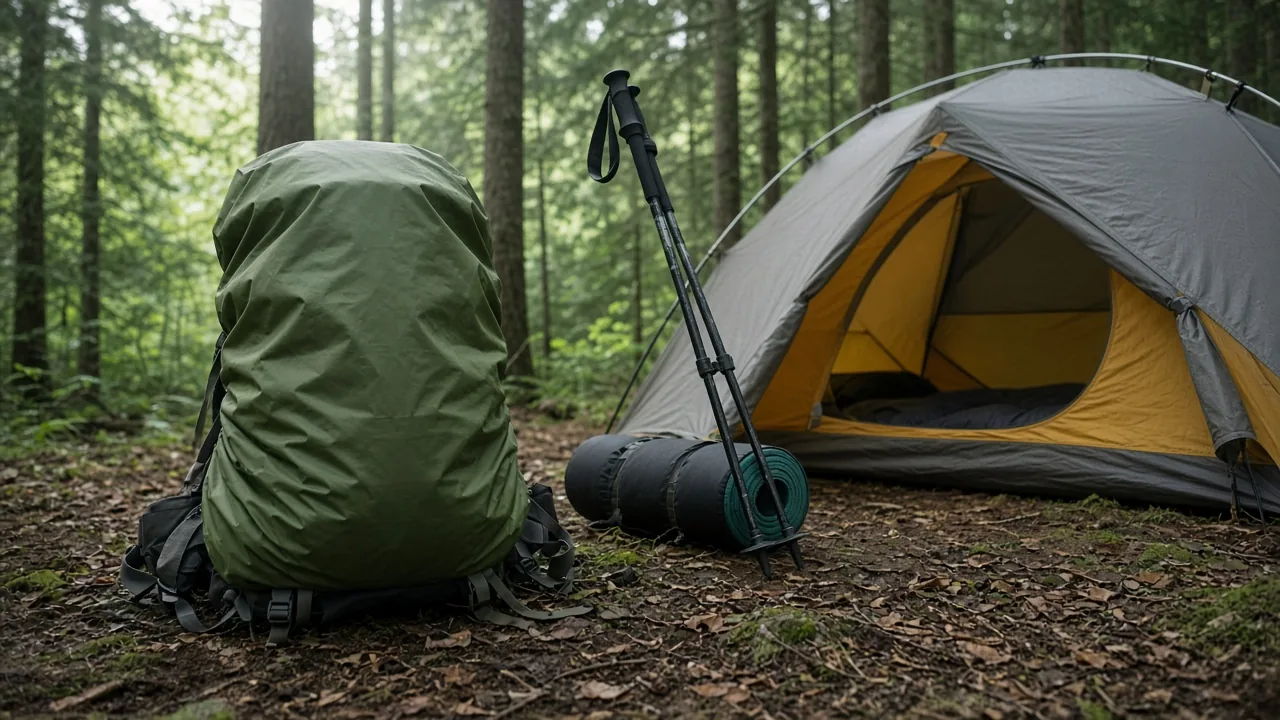
A pack rain cover earns a spot on most backpacking and travel gear lists when you face steady rain or need to check a loaded pack, but fit and drain holes decide whether it actually works. This backpack rain cover buying guide explains what to check before you buy, how to fit a cover so it does not slide, and when the extra few ounces are worth carrying.
What a Backpack Rain Cover Does
Rain Protection While Hiking
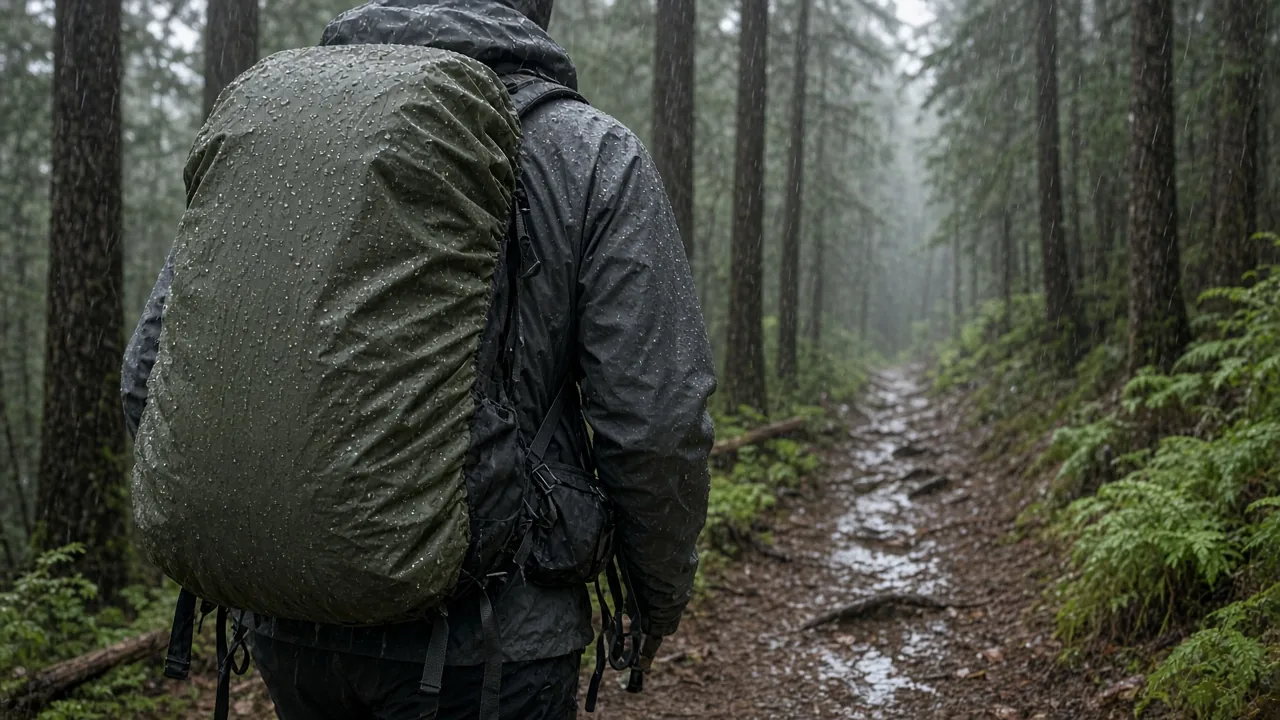
A well-fitted cover sheds water from the top and sides so the pack body and contents stay drier under a rain jacket or poncho. Most hiking rain covers use an elastic edge and a shaped top section to follow the pack frame. They are not a substitute for dry bags or a pack liner, but they reduce the amount of water soaking into straps, zippers, and fabric.
For a multi-hour walk in steady rain, that can mean the difference between a damp pack shell and a soaked one. Pair the cover with a rain jacket or poncho, and the pack stays protected from most direct rain while your body stays drier too. The shoulder straps and hip belt still get some moisture, but the main pack body and external pockets take far less water.
A rain cover also helps when you set the pack down on wet ground. Without one, the bottom panel can sit in a puddle and gradually absorb water. With a cover, water runs off the coated fabric, and the pack’s bottom stays dry enough to pick up without dealing with a dirty, wet panel.
Luggage and Transit Protection
When you strap on trekking poles, a tripod, or a foam pad, a rain cover wraps those loose attachments into one closed bundle. Airline staff and rail baggage checks tend to read the pack as a single contained bag when no straps or tool handles are hanging free. Some travelers use a pack cover mainly for this reason, not for rain.
A 45-liter pack usually still counts as carry-on size, but external gear can get it rejected at the airline counter. A cover hides the attachment points and makes the pack look less likely to snag conveyor belts or baggage equipment. It also keeps compression straps from tangling with other luggage in a cargo hold.
Before transit, remove or cinch down anything that could shift and rip the fabric. A cover is not a heavy-duty shipping bag, but it reduces the chance that a loose buckle or strap gets caught. If you fly with luggage that gets checked by hand, an enclosed cover can make the inspection process easier because the pack reads as one item.
Backpack Rain Cover Buying Guide: Features That Matter
Drain Holes and Fabric
Look at the bottom panel before you buy. A cover without drain holes can trap water that gets behind the fabric after a branch or zipper rubs through. Covers with two small drain openings let that water escape instead of pooling against the pack body. If water sits inside, it can soak through seams and into the pack fabric over time.
In terms of fabric, ripstop nylon and 450D-or-higher nylon 66 are more tear-resistant than basic polyester. A thin polyester cover can work in a short shower, but it may snag on brush, sharp latch points, or rough cargo floors. Some experienced hikers favor Cordura or nylon 66 in a heavier denier because it is much harder to puncture.
The coating on the inside also matters. A polyurethane or silicone-coated cover will shed more water than an uncoated shell, but the coating can wear off with abrasion. Check the seams as well. Taped seams keep water from leaking through the stitching, which is where many budget covers fail first.
Fit and Retention
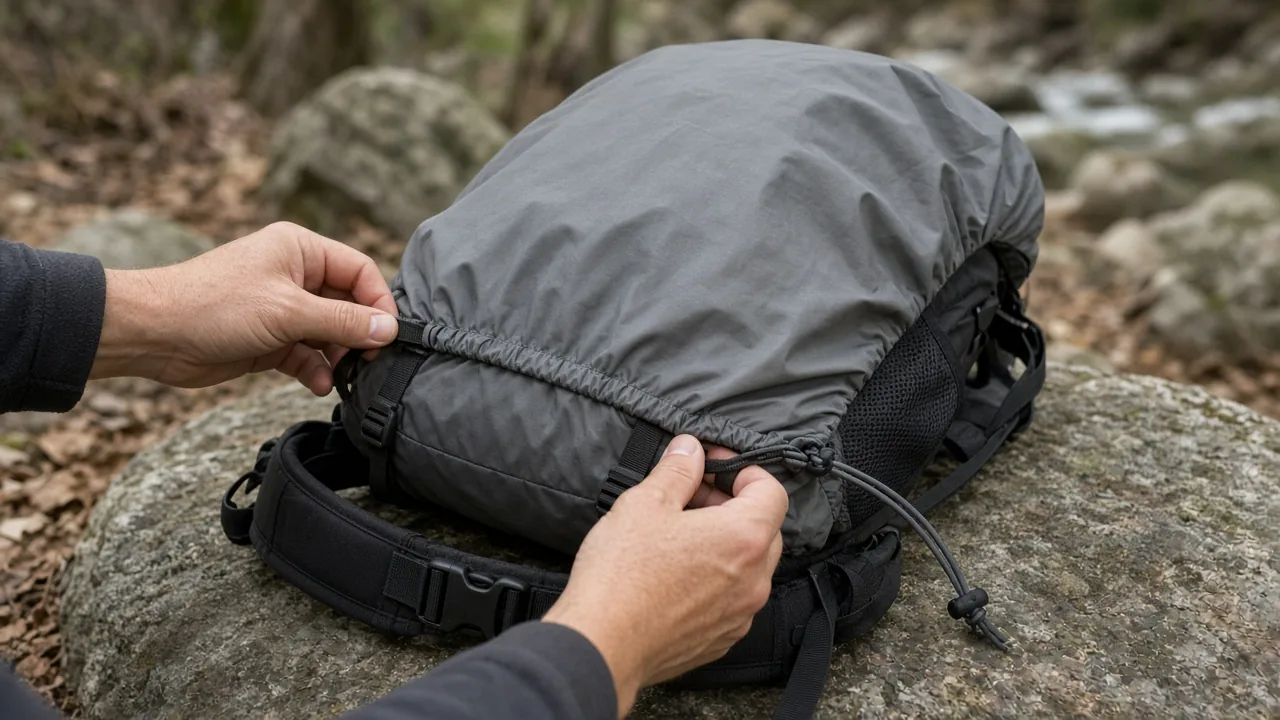
Elastic edges alone can slip in wind or when you set the pack down. Good retention pieces include side loops that wrap around the hip belt, a drawcord or webbing strap around the pack face, and enough stretch to cover the top frame without popping off. If the cover has only an elastic hem, it should fit the pack volume closely rather than being one-size-fits-all.
A loose cover flaps, lets rain in from the sides, and can catch on branches. The hip-belt loops are especially useful because they stop the cover from sliding upward when you bend over or hoist the pack. A top drawcord also helps cinch the cover around the pack’s top pocket or brain, keeping the hem from peeling back in strong gusts.
For travel use, retention is less about wind and more about staying in place when baggage handlers move the pack. A cover with a strap or drawcord around the middle stays put better than one that relies only on an elastic hem. If the cover slides, it can expose external gear and create a loose corner that rips.
How to Fit a Rain Cover So It Stays Put
Work from top to bottom. Set the logo or tag side up, pull the elastic section over the pack’s top frame, then stretch the lower edge down over the pack bottom. After the cover is in place, secure any side loops around the hip belt and tuck the top edge under the shoulder straps or load lifters. This sequence keeps the cover centered and stops it from sliding sideways when you move.
Osprey Ultralight Example
The Osprey Ultralight Rain Cover stores in a small attached pouch at the pack bottom, so it is easy to find without unpacking. To fit it, pull the cover out and check that the logo side faces up. Run the elastic edge over the top frame, then pull the body down until it wraps around the pack bottom.
The side loops clip around the hip belt wings, and the top can be tucked under the shoulder straps or load lifter straps. That retention matters because the cover needs to stay put while you swing the pack on and off. If the top edge is not secured, it can ride up and expose the top pocket.
Some Osprey users find the cover fits cleanly only on Osprey packs, where the top frame and hip belt align with the cover’s elastic sections. On other brands, the side loops may sit too far forward or back, and the top shape may not match the frame. The cover still works, but you may need to adjust it more often.
Fitting Over External Gear
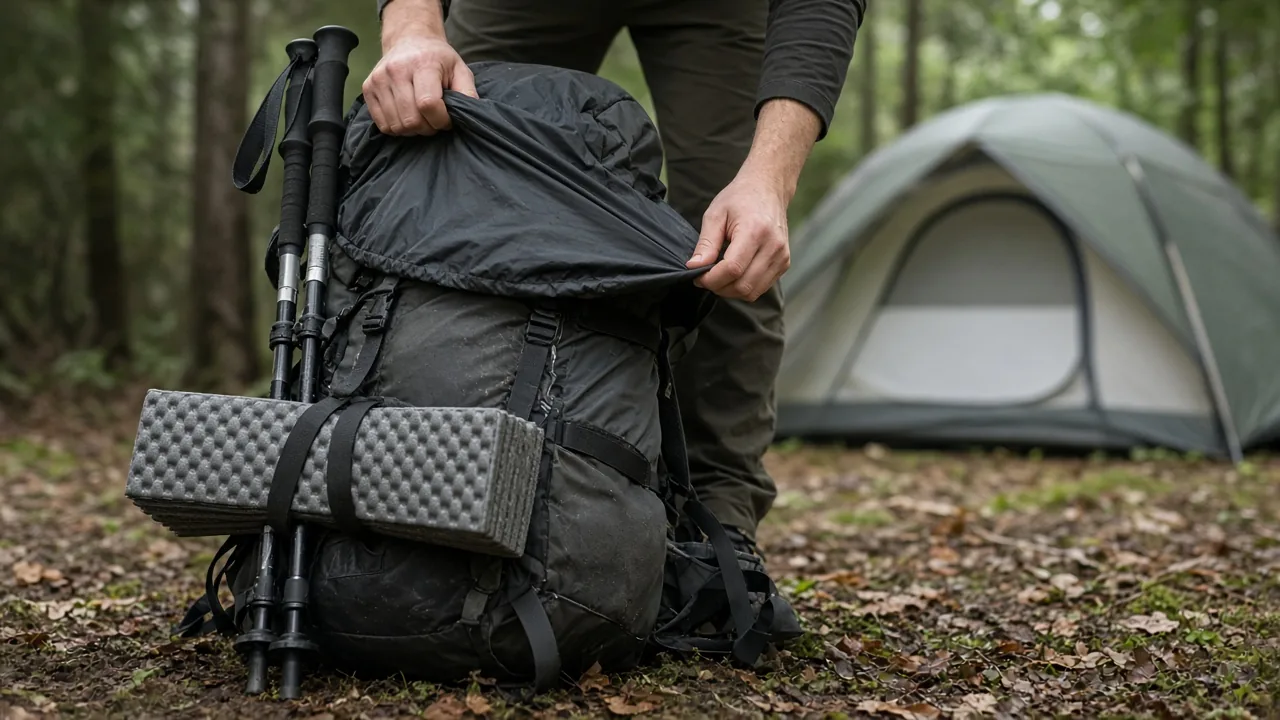
Before covering a pack for transit, cinch down poles, tripod legs, and any tool handles so nothing points outward. Then pull the cover over the whole pack and attachments, starting at the top and working down. Check that no sharp point is pressing hard against the fabric.
If a trekking pole tip or tripod foot is exposed, re-cinch it or wrap the tip before putting the cover back on. A loaded pack with a cover should look like one contained bag, not a bundle with corners sticking out. Any hard edge that pushes against the cover will eventually tear or wear a hole, usually at the most inconvenient time.
Benefits and Tradeoffs of Common Options
Osprey Ultralight Rain Cover
Pros include the connected stuff sack, a fitted shape for Osprey packs, and hip-belt retention loops that reduce sliding. The fabric is a lightweight ripstop nylon, which balances weight and tear resistance. Because the pouch is attached to the pack bottom, you are less likely to forget the cover at a lunch spot.
Cons include the large logo, which some users dislike, and a shape that works best with Osprey pack geometries. If you carry a different brand, it may still fit, but the side loops and top pocket may not line up as cleanly. The cover is also optimized for rain protection during hiking, so it may not have the same heavy-duty feel as a travel-focused cover.
Basic vs. Durable Covers
A basic polyester cover usually costs less and packs small, but it often lacks bottom drain holes and may have only an elastic hem. That can hold water and flap in strong wind. A heavier nylon cover adds a few ounces and takes slightly more space, but the fabric survives more trips and the drawcord or strap retention stays more secure.
For a cover you plan to use mainly around town or for airline check-in, a basic model may be enough. For repeat rainy backpacking, the tougher fabric usually earns its weight. Check the bottom panel before buying any basic cover; if it has no drain holes, you can add them, but that is an extra step.
| Option | Weight and packed size | Fabric | Drain holes | Retention | Best for |
|---|---|---|---|---|---|
| Osprey Ultralight Rain Cover | Light, compact in attached pouch | Ripstop nylon | Check bottom panel before buying | Hip-belt side loops, fitted top shape | Osprey pack owners, backpacking |
| Basic polyester cover | Very light, small packed size | Basic polyester | Often missing | Elastic hem only | Light rain, occasional travel |
| Durable nylon cover | A few ounces heavier, slightly bulkier | 450D nylon 66 or Cordura | Usually included | Drawcord or strap plus elastic | Car camping, rough use, checked baggage |
Who Should Carry a Backpack Rain Cover
Backpacking vs. Car Camping
For backpacking, weight and packed size matter more than a few extra features. A compact cover with a stuff sack and simple retention is fine if you also carry a pack liner. You want the cover to be easy to deploy from the outside pocket and small enough to disappear when the forecast clears.
For car camping, you can leave a larger, tougher cover in the trunk or tent without counting ounces. Setup convenience and durability matter more when the pack is tossed into a truck bed or moved around camp. A heavier cover with stronger fabric and more secure straps is not a penalty when you are not carrying it on your back all day.
When to Skip the Cover
If the forecast is dry and your critical gear already sits inside a pack liner or waterproof stuff sacks, you can leave the rain cover at home and save a few ounces. The same applies on fast weekend trips where a small dry bag for electronics is enough. A pack cover is useful, but it should not become default dead weight.
Check the weather and your packing system before you add it. If you are camping in an area with fire restrictions or dry conditions, the cover still does not replace proper food storage and trash management. Always check campsite rules and fire restrictions separately from your gear list.
Care, Storage, and Safety
Drying and Storing
After a wet hike or a rainy transit leg, shake out the cover, turn it inside out if needed, and air-dry it before stuffing it back into its pouch. Putting a wet cover away lets mildew and odor build up inside the attached sack. If it is soaked, hang it from a pack loop or tent line until it is dry enough to pack.
Do not store the cover against a damp tent or sleeping bag. The same rule applies to any coated fabric: moisture trapped between layers shortens the coating life and creates a sour smell. Keep the pouch closed only when the cover is dry.
Patching and Replacing
If a cover has no drain holes, add two small openings at the bottom with a sharp point and reinforce the edges with tape or seam sealer. Patch small tears with repair tape rather than replacing the whole cover. Keep in mind that a rain cover is one layer, not a substitute for a pack liner.
Never use a stove or heater inside your tent to dry a rain cover or any gear. Carbon monoxide and fire risk make that dangerous. Dry gear outside or in a well-ventilated area, and always follow the manufacturer’s instructions for any fuel appliance.
Before you pack, ask whether this trip is backpacking or car camping, how wet the night might be, and whether you will check the bag for a flight or train. Bring the backpack rain cover only if it fits those needs, and pair it with a pack liner for the gear that has to stay dry. Check the forecast, pack out your trash, and follow local fire rules along the way.
— Camp Kit Journal
This article is general information about camping gear, not professional safety, medical, or wilderness training. Check fire restrictions, weather, and campsite rules before you go, and follow the manufacturer's instructions for your own equipment.
FAQ
Do backpack rain covers replace dry bags or pack liners?
No. A rain cover reduces water soaking into straps, zippers, and fabric, but it is not a substitute for dry bags or a pack liner for gear that must stay dry.
What features should I check before buying a backpack rain cover?
Check the bottom panel for drain holes, fabric like ripstop nylon or 450D nylon 66, taped seams, and retention pieces such as hip-belt loops or a drawcord.
How do I fit a rain cover so it does not slide?
Work from top to bottom, pull the elastic section over the pack’s top frame, stretch the lower edge over the pack bottom, then secure side loops around the hip belt and tuck the top edge under shoulder straps or load lifters.
Can I use a backpack rain cover for airline travel or checked baggage?
Yes. A cover wraps loose attachments into one closed bundle and hides external gear, which can help a pack read as a single contained bag during airline or rail baggage checks.
When can I skip carrying a backpack rain cover?
If the forecast is dry and critical gear already sits inside a pack liner or waterproof stuff sacks, you can leave the rain cover at home and save a few ounces.