Are Mini Thrower Flashlights Worth It for Camping?
A mini thrower flashlight earns pack space for open terrain and night route-finding, but a small EDC light is lighter and more practical for most base camp chores. This guide compares beam distance, weight, controls, and waterproofing.
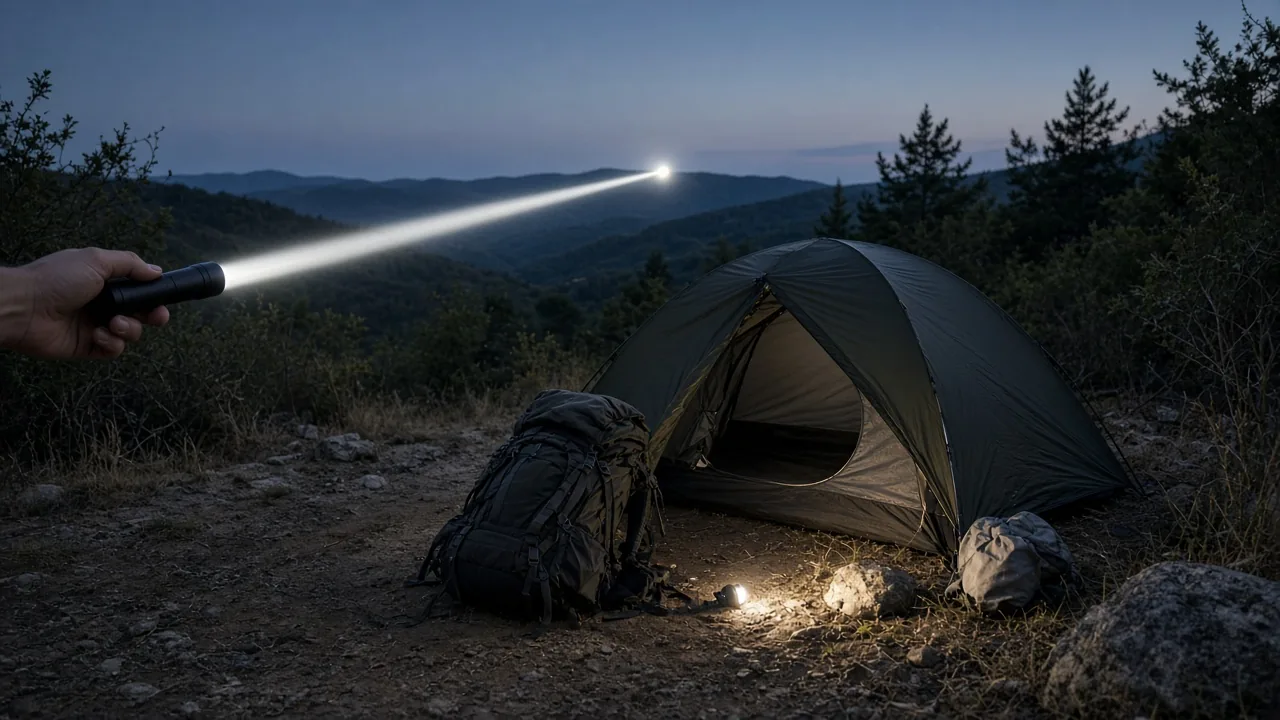
Are mini thrower flashlights worth it for camping? A compact thrower earns pack space for open terrain and night route-finding, but a small EDC light is lighter and more practical for most base camp chores. A mini thrower like the Thrunite Catapult Mini can reach nearly 600 meters, yet it weighs more than four ounces and lacks the clip that makes a keychain light easy to carry. The right choice depends on where you camp, how you move after dark, and whether you need distance or close-up light.
What a Mini Thrower Does Differently from a Small EDC Light
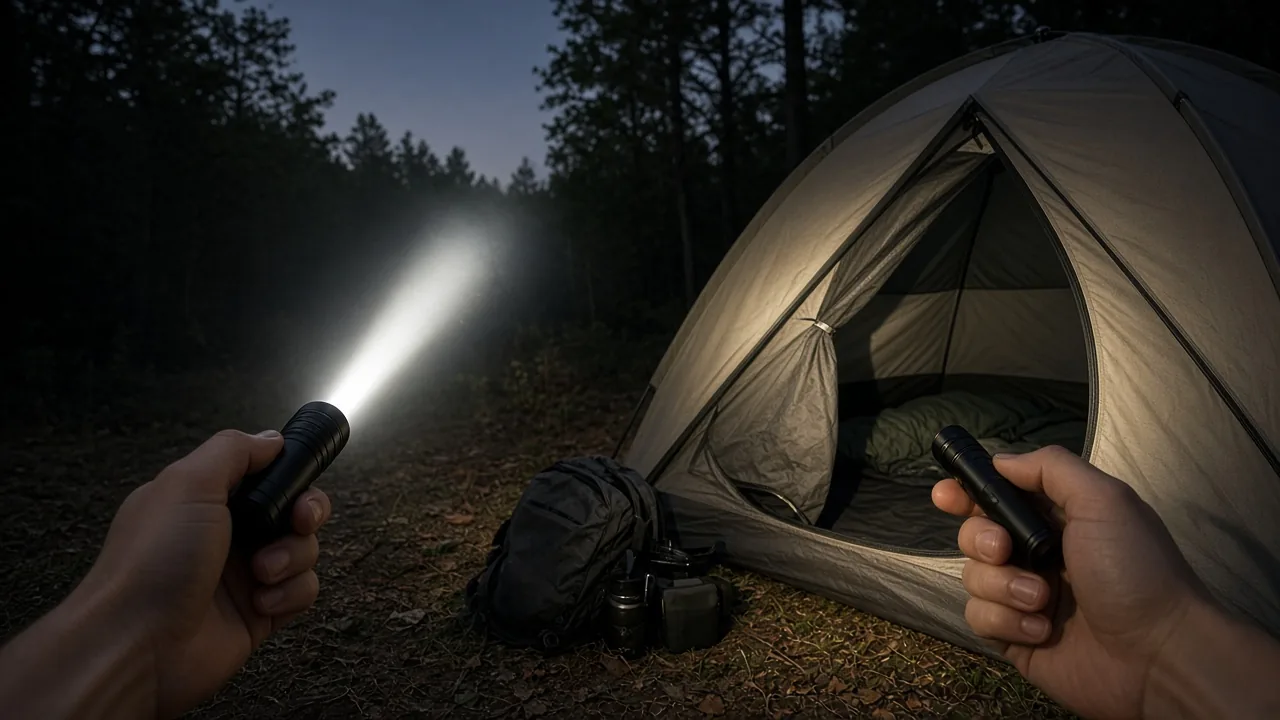
A mini thrower focuses modest lumens into a narrow, far-reaching beam. A small EDC light such as the RovyVon Aurora A5 is tuned for close tasks, lantern modes, and keychain carry.
The Catapult Mini produces 680 lumens in turbo, which sounds unremarkable next to high-output pocket lights. What makes it different is the beam pattern: a PMMA TIR reflector concentrates that output into a tight spot that reaches a reported 598 meters. The RovyVon A5, by contrast, spreads its light broadly for reading, tent organization, and walking around camp.
Neither light replaces the other automatically. A mini thrower is a specialty tool. A small EDC light is a general-purpose one.
Why Beam Distance, Not Peak Lumens, Is the Real Reason to Buy
A mini thrower's spec like 680 lumens sounds modest next to 5,000-lumen pocket lights, but its narrow TIR beam reaches 598 meters. Judge it by beam distance rather than lumens.
The Fenix E40R puts out 5,000 lumens, yet its beam distance is only 242 meters. That is not a flaw; it is a different design goal. High lumens with a broader reflector light up a wide area. A mini thrower sacrifices flood for reach.
For camp use, reach matters when you need to spot a trail junction across a meadow, check a shoreline from a ridge, or signal someone far away. If most of your after-dark needs are within 30 feet, raw lumens and a wide beam serve you better.
Key Specs: Weight, Beam Distance, Runtime, and Waterproofing
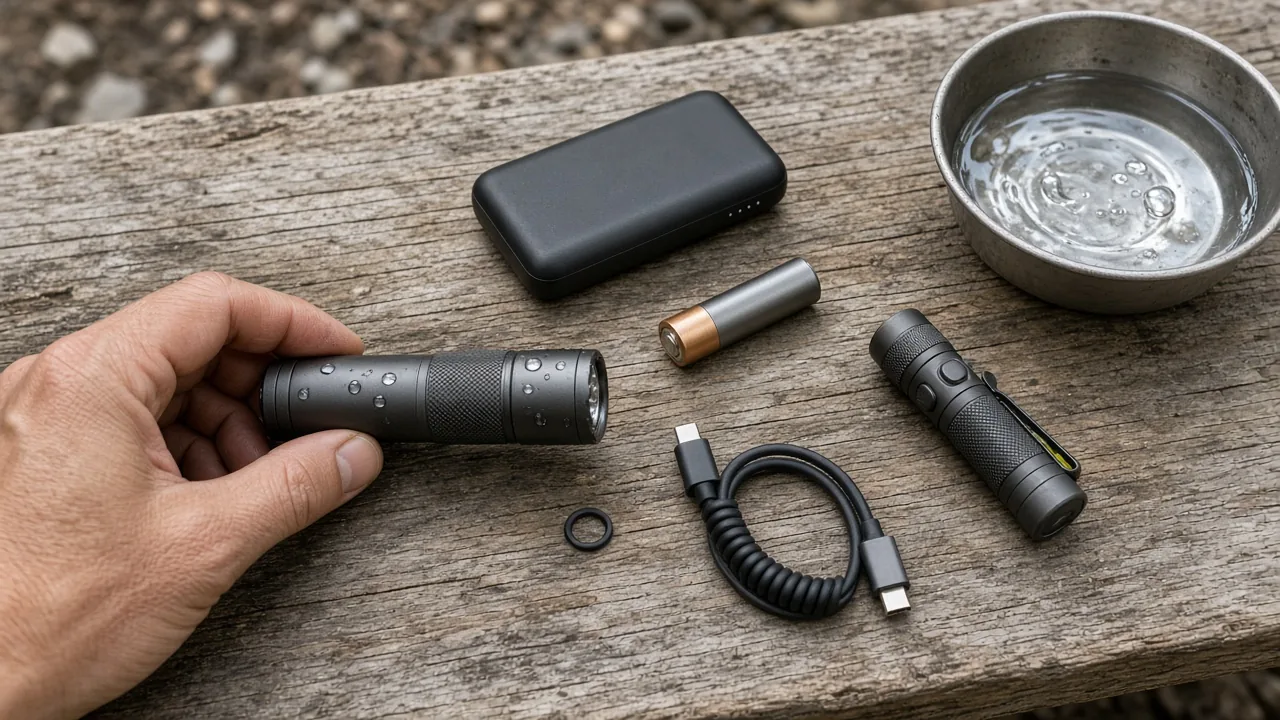
Compare Catapult Mini at 4.09 oz and 598 meters reported beam, RovyVon A5 at 0.4 oz with IP66, and Fenix E40R at 242 meters with IP68 and 5,000 lumens.
Here are the numbers that matter most for camping:
| Light | Weight | Beam Distance | Peak Output | Waterproof Rating | Battery |
|---|---|---|---|---|---|
| RovyVon Aurora A5 | 0.4 oz | Not specified | Over 650 lumens | IP66 | Built-in 330mAh, USB-C |
| Thrunite Catapult Mini | 4.09 oz | 598 m | 680 lumens | Not specified | Rechargeable, USB-C |
| Fenix E40R | 7.76 oz with battery | 242 m | 5,000 lumens | IP68 | 21700 5,500mAh, USB-C |
| CYANSKY K3 V2 | Heavier than E40R | Not specified | 2,000 lumens | IP68 | 21700 5,000mAh, USB-C |
Weight tells part of the story. The A5 disappears on a keychain. The Catapult Mini slips into a jacket pocket. The E40R and K3 V2 are belt-carry lights, not pocket trinkets.
What Users and Spec Comparisons Like About Mini Throwers
Reviewers highlight the Catapult Mini's small size-to-range ratio, beacon mode, and USB-C charging. Owners of small EDC lights often praise magnetic clips, lantern modes, and simple one-hand controls.
A compact body that can reach several hundred meters is genuinely useful. The Catapult Mini delivers that without the mass of a full-size thrower. Its beacon mode gives you a signal option beyond strobe, which can help in emergencies or roadside breakdowns.
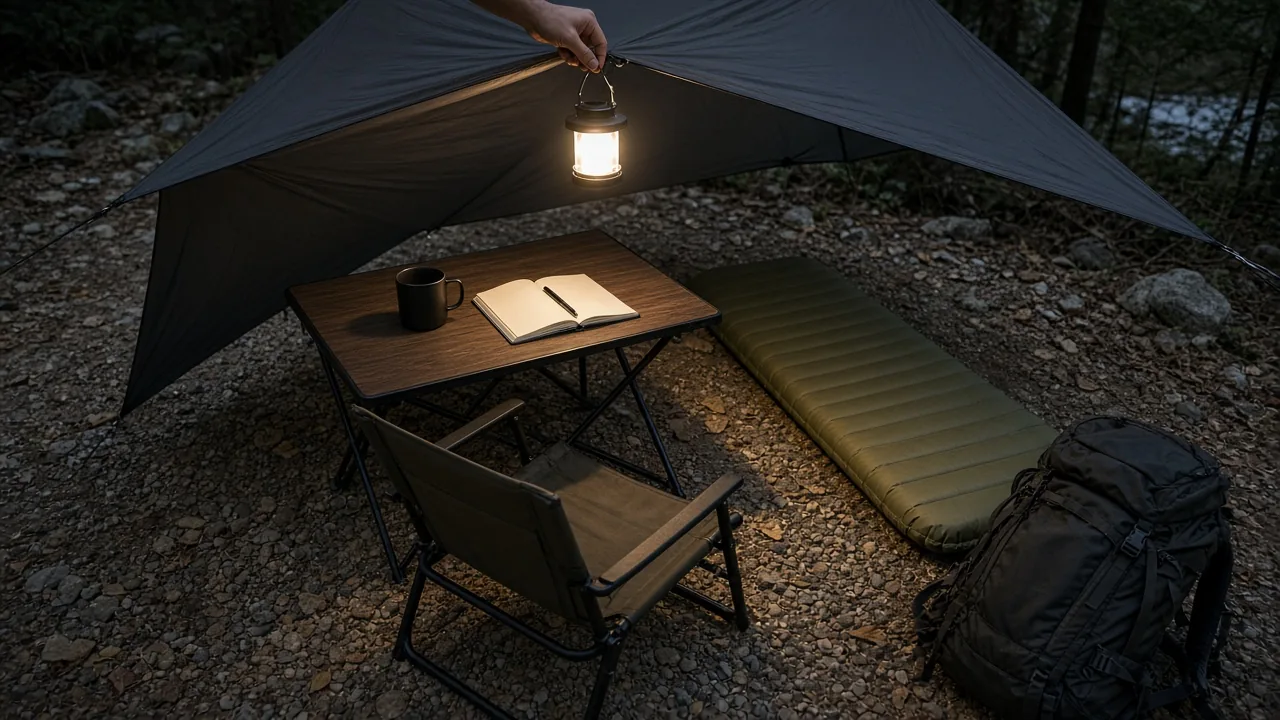
The A5 earns praise for its lantern mode and magnetic clip. Clipping it to a hat brim solves the problem of a headlamp blocked by a baseball cap visor. That makes it a practical hands-free option for camp tasks.
Beacon and Signal Modes May Matter More Than Maximum Lumens
Beacon mode can help with roadside warning or search-and-rescue signaling, but keep fuel appliances outside. Never use a stove or heater inside your tent.
A blinking light that repeats at intervals is easier to notice than a steady beam. The Catapult Mini offers beacon and S.O.S. modes alongside strobe. If you hike alone or camp in remote areas, that signaling capability may justify the extra weight.
The Fenix E40R includes a strobe mode that can serve a warning function, especially near roads. Still, beacon mode's repeating pulse is often easier for search teams or passing vehicles to recognize from a distance.
USB-C Charging and Battery Choices Matter at Camp
USB-C direct charging appears on Catapult Mini, RovyVon A5, and Fenix E40R. Fenix supports pass-through use, while a AAA light like CYANSKY P10 offers quick cell swaps.
USB-C means you can top up from a power bank, car adapter, or wall charger you already carry for your phone. The Fenix E40R takes that further with pass-through charging, so you can keep the light running while it is plugged in.
Swap-in batteries have their own advantage. The CYANSKY P10 runs on AAA cells, so a dead battery becomes a 30-second fix at any gas station. That matters on long trips away from power.
What Are the Downsides of Mini Thrower Flashlights?
The Catapult Mini has no pocket clip or holster, a wider head, and multi-click controls that take practice. The RovyVon A5's IP66 rating and tiny built-in battery limit sustained high-output use.
A mini thrower's bigger head makes it harder to pocket than a slim EDC light. Without a clip or holster, it often ends up buried in a pack pocket where you cannot reach it quickly. That reduces its usefulness as a camp light.
The A5 charges quickly but runs on a small built-in cell. High output drains it fast, and when it is empty, you need a power source rather than a fresh battery.
Carry and Control Complexity Can Cancel Out Small Size
A light without a clip or holster often stays in a pack pocket, and multi-click mode memory can be harder to use with cold hands or gloves.
The Catapult Mini requires different click patterns for different modes: single click, double click, triple click, and long press. That is learnable, but in cold weather or when you wake up disoriented, simple is better.
The Fenix E40R uses separate controls for power and brightness, which reduces the learning curve. A light you can operate without thinking is more likely to get used.
Waterproof and Battery Differences Are Wider Than Marketing Suggests
IP66 on RovyVon A5 is rain-resistant but not the same as IP68 on Fenix E40R or CYANSKY K3 V2. Built-in batteries mean recharging rather than a quick cell swap.
IP66 protects against strong water jets but not submersion. IP68-rated lights can survive being dropped in a stream for a short period. If you camp near water or hike in heavy rain, that difference matters.
A built-in battery is convenient until it is empty. With the Catapult Mini or A5, you carry a power bank or return to your vehicle. With a AAA light like the P10, you swap cells and keep moving.
Are Mini Thrower Flashlights Worth It for Camping? Who Should Pack One Instead of a Small EDC Light?
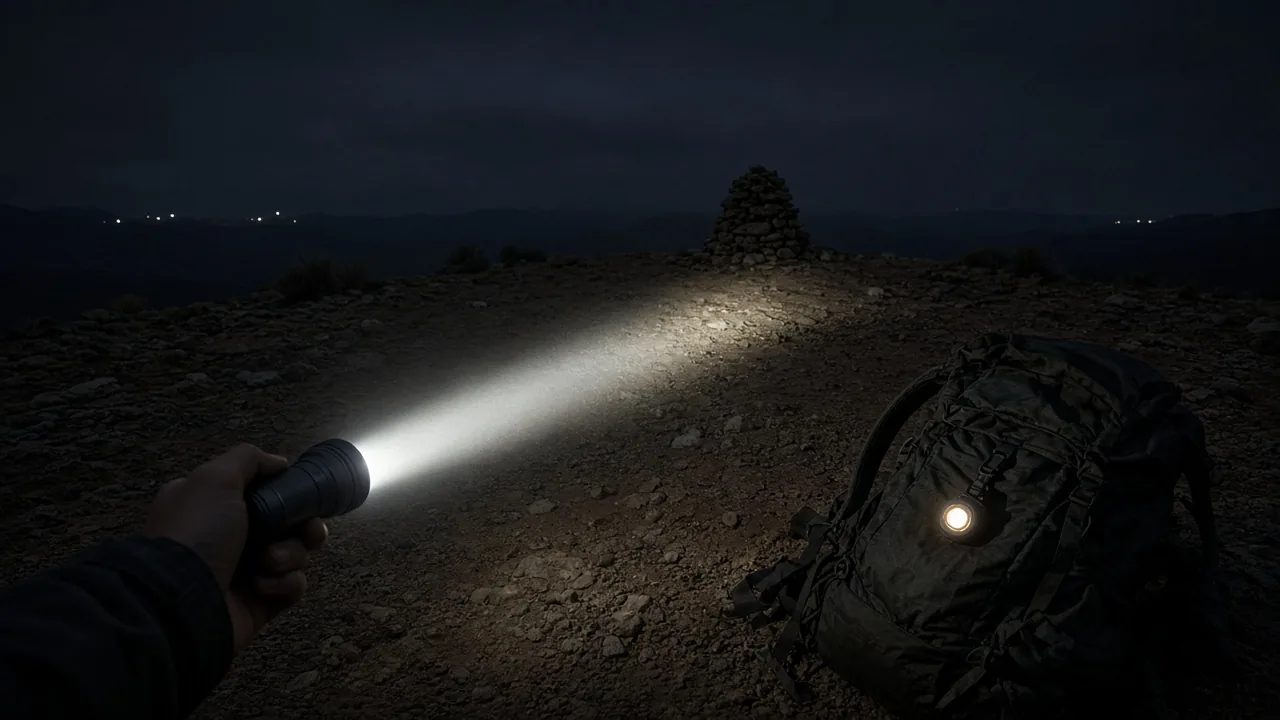
Pack a mini thrower for open-water, desert, or ridge camps where you need to spot trail markers, boats, or people at distance. Pack a small EDC for tent chores, campground paths, and ultralight trips.
Desert and alpine terrain reward reach. When the trail crosses open ground or follows cairns, seeing the next marker from 200 yards prevents wrong turns. A floody EDC light cannot do that reliably.
Forest campgrounds and established sites rarely require long-distance beam distance. You are more likely to need a headlamp-style light for cooking, tent setup, and walking to the restroom. Here, the A5's light weight and lantern mode win.
Car Camping vs Backpacking: Let Weight and Pack Size Decide
For car camping, heavier Fenix E40R or CYANSKY K3 V2 output and runtime are acceptable. For backpacking, RovyVon A5's 0.4 oz saves weight but lacks distance.
Car campers can afford the Fenix E40R's 7.76 ounces with battery. The 5,000-lumen output turns a dark campsite into broad daylight, and the magnetic tail cap sticks to a car door or hatch for hands-free work.
Backpackers count ounces. The A5 weighs less than a granola bar and covers most camp tasks. A mini thrower is a middle path: useful if your route crosses open terrain, but not worth carrying if you spend every night in tree cover.
Weather, Fire Restrictions, and Campsite Rules Should Decide the Last Slot
Check forecast, fire restrictions, and campsite rules before deciding which light earns a place. Specs like IP66 or IP68 are not a substitute for trip planning.
A waterproof light helps in rain, but it does not make a trip safe if the forecast calls for flooding or lightning. Know the conditions you face and choose accordingly. Fire restrictions can also change how much you rely on electric light after dark.
Campsite rules may limit where you can walk at night or require certain lighting. Some areas near wildlife or nesting grounds discourage bright lights. Check local guidance before you go.
How Do Mini Thrower and Small EDC Specs Compare?
Use the table above for RovyVon A5, Thrunite Catapult Mini, Fenix E40R, and CYANSKY K3 V2. The key columns are weight, beam distance or output, runtime, waterproof rating, battery, and car-camping vs backpacking fit.
The Catapult Mini offers the best distance-to-weight ratio. The A5 wins on portability. The Fenix E40R covers broad-area lighting with useful runtime. The K3 V2 sits between mid-size and heavy, with strong waterproofing and a replaceable 21700 cell.
How to Read the Comparison Table for Your Next Trip
Match the light to your after-dark task: close-up camp work needs flood and simple controls. Distance identification or signaling needs more beam distance and comfortable carry.
Ask what you actually do after dark. If the answer is cook, read, and sleep, a small EDC light covers it. If you scout routes, check shorelines, or need to signal across open ground, beam distance earns its weight.
How Should You Choose and Maintain a Compact Camping Flashlight?
Choose controls you can operate cold-handed, match beam distance to your actual campsite and route, and keep seals, charge ports, and lockout ready before packing.
Test the controls before you buy or before the trip. A light that requires fine motor skills in warm weather may frustrate you at 35°F with stiff fingers. Simple switches age better in camp use.
Beam distance should reflect your terrain. In dense forest, 50 meters is generous. In open desert or above treeline, 300 meters may be the minimum useful range.
Simple Care and Storage for Longer Life
Keep USB-C port covers closed, replace O-rings to maintain sealing, and use lockout or a rigid switch to prevent accidental activation and heat inside a pack.
Dust and moisture degrade seals over time. The Catapult Mini ships with a spare O-ring and USB-C cover, which suggests the manufacturer expects those parts to wear. Replace them when they crack or lose tension.
Accidental activation in a pack can drain the battery or overheat a high-output light. Use the lockout function on lights like the Fenix E40R, or loosen a tail cap on twist-operated models when storing.
Alternatives If a Mini Thrower Is Not Your Best Buy
If you only need tent and path lighting, a small EDC keychain light or headlamp-style clip is more practical. If you need more reach, a larger thrower adds weight and output.
The A5 clips to a hat brim and doubles as a lantern, covering the roles a headlamp usually fills. For many campers, that is enough. No separate thrower needed.
If your trips involve open water, search-and-rescue work, or long-distance route-finding, a full-size thrower may serve you better than a mini version. You trade weight for beam distance and runtime.
Decide by trip type, expected night temperature and rain, and whether you need distance or close-up lighting. A small EDC light covers most base camp needs, while a mini thrower earns space for open-country signaling and route-finding. Weigh the light you carry against the tasks you will actually face after sunset.
This article is general information about camping gear, not professional safety, medical, or wilderness training. Check fire restrictions, weather, and campsite rules before you go, and follow the manufacturer's instructions for your own equipment.
FAQ
Are mini thrower flashlights worth it for camping?
It depends on where you camp. A mini thrower like the Thrunite Catapult Mini is useful for open terrain and spotting trail markers at distance, while a small EDC light is lighter and better for tent chores and campground paths.
What is the beam distance of the Thrunite Catapult Mini?
The Thrunite Catapult Mini produces 680 lumens in turbo and has a reported beam distance of 598 meters.
Should I choose a mini thrower or a small EDC light for backpacking?
Backpackers who count ounces may prefer a small EDC light like the RovyVon Aurora A5 at 0.4 oz. A mini thrower is a middle path if your route crosses open terrain and you need distance.
Is the RovyVon Aurora A5 waterproof enough for camping?
The RovyVon Aurora A5 has an IP66 rating, which is rain-resistant but not the same as IP68-rated lights like the Fenix E40R or CYANSKY K3 V2.
What matters more for camping, lumens or beam distance?
Beam distance matters more for spotting trail junctions, shorelines, or signaling across open ground. High lumens with a broad beam are better for close-up camp tasks within about 30 feet.