Are Foam Sleeping Pads Good for Winter Camping? R-Value Guide
Are foam sleeping pads good for winter camping? Most closed-cell foam pads top out around R-value 2, so they are too cold alone on frozen ground. Learn when foam fails and how to stack or upgrade for winter.
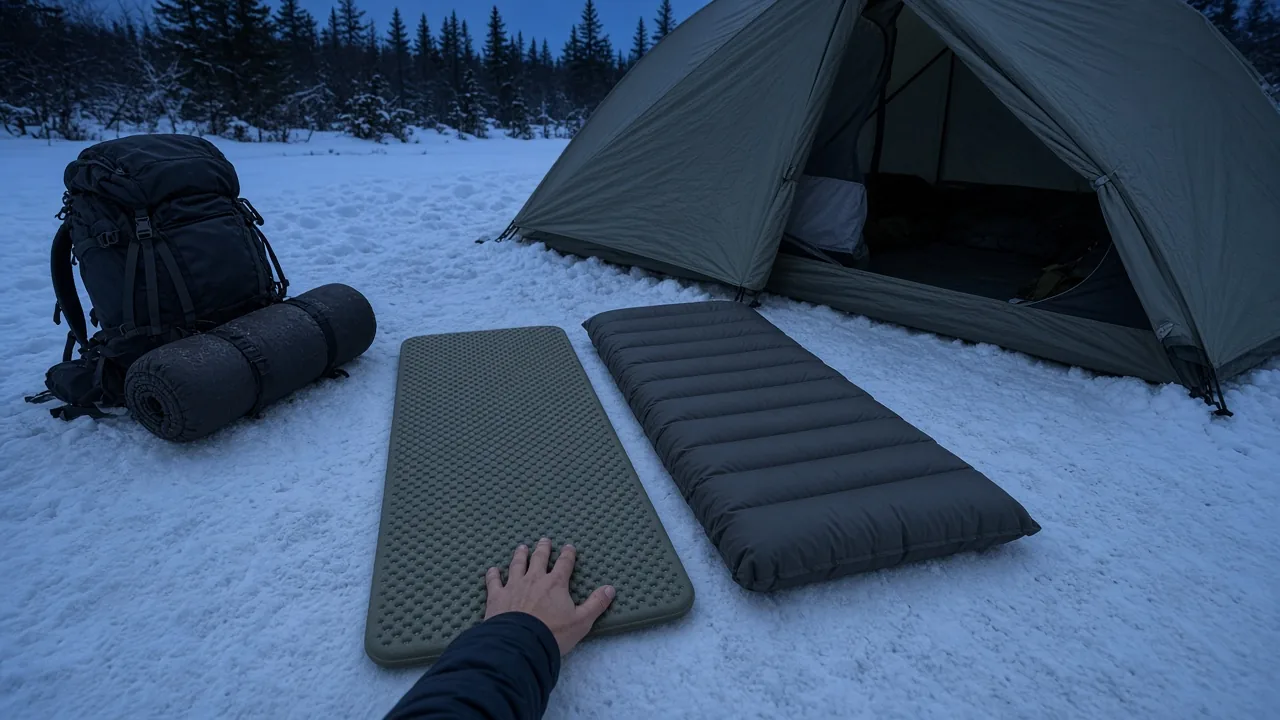
Are foam sleeping pads good for winter camping? In most cases, no. A closed-cell foam pad usually tops out around R-value 2, while sleeping bag temperature ratings assume you are sleeping on a pad rated near R-4.8. That gap means a foam pad alone can leave your back cold on frozen ground even when your bag is rated for colder weather. Foam still works for warm-weather trips and puncture-prone terrain, but it is not a reliable winter pad by itself.
Are Foam Sleeping Pads Good for Winter Camping?
Foam pads work for warm-weather trips and puncture-prone ground, but below about 41°F you will feel back cold. They are not a dependable winter pad unless you stack them with another insulated pad.
What R-Value Means for Cold-Weather Sleep
R-value measures how much a pad resists heat flow from your body to the ground. The higher the number, the more insulation the pad provides, and R-values add together when you stack pads. A pad with R-2 plus a pad with R-3 gives roughly R-5 total.
Sleeping bag temperature ratings are tested using a heated manikin that sleeps on a pad with an R-value of 4.8. If your pad has a lower R-value, the bag may feel noticeably colder than its rating suggests. In plain terms, the test standard already assumes a fairly warm sleeping pad under the bag. Use a thinner, less insulated pad, and you are giving up part of the warmth the bag was designed to retain.
This matters because your body loses a lot of heat into the ground. Roughly half your body is in contact with the sleeping surface. When you lie on a sleeping bag, the fill under your back compresses and loses much of its ability to trap warm air. The pad below you becomes the main barrier between your body heat and the cold ground.
Foam Pad Limits Below Freezing
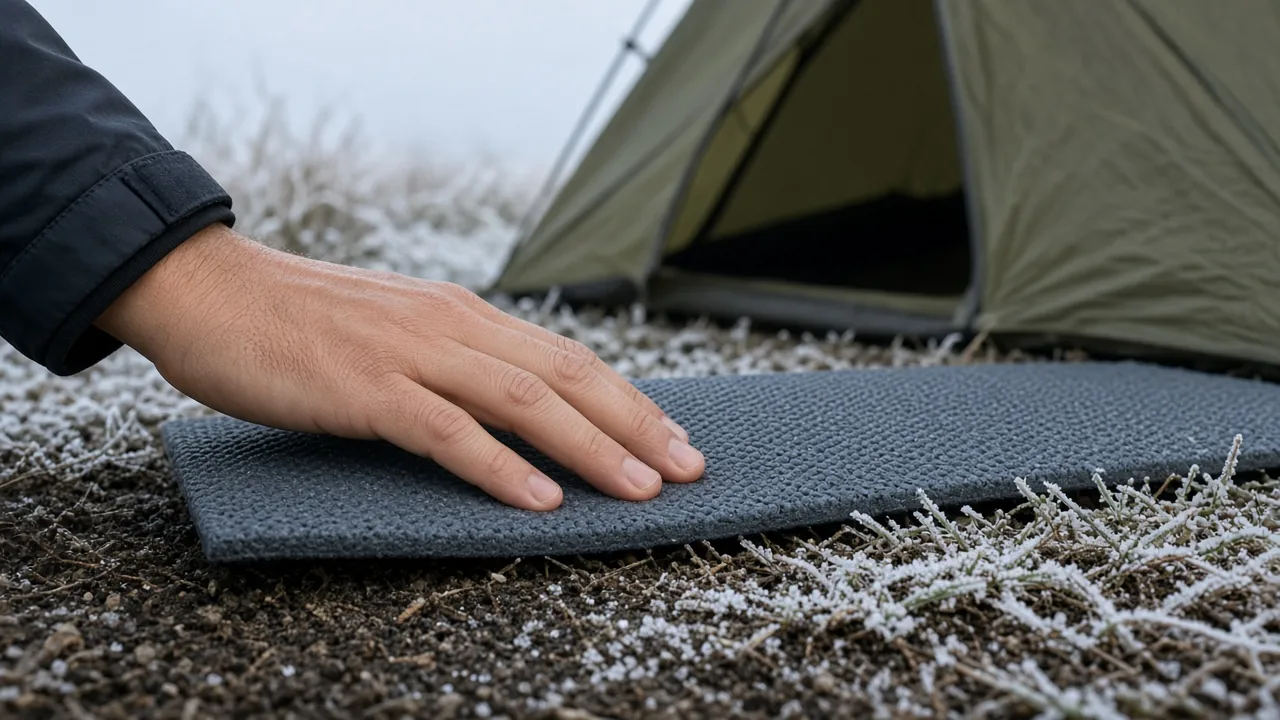
Closed-cell foam pads are usually only about 0.6 inch thick, and their R-value typically tops out near 2. That is enough for mild nights and warm ground, but not for frozen soil or snow. When nighttime temperatures drop below freezing, ground cold conducts heat away from your body quickly. You may feel the cold through your back, shoulders, and hips even if the rest of your bag is warm.
Below roughly 41°F, a foam pad alone starts to feel cold for many sleepers. On snow, frozen ground, or hard-packed dirt, the problem gets worse. The pad cannot trap enough still air beneath you because it is thin and the closed-cell foam has limited insulation. If you tend to sleep cold, or if the forecast calls for temperatures near or below freezing, a foam pad by itself is not enough.
When an Insulated Air Pad or Self-Inflating Pad Is the Upgrade
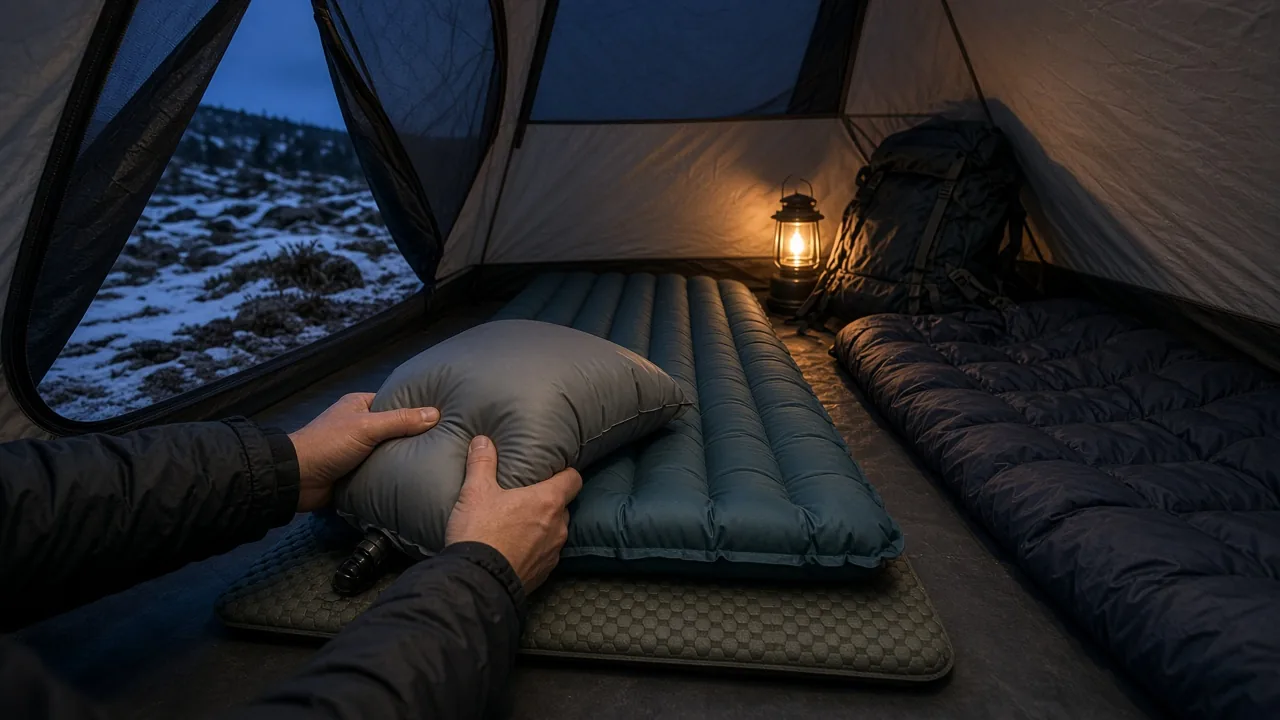
For snow, frozen ground, or nights near or below 20°F, choose an insulated air pad or a self-inflating pad with an R-value of 5 or higher. A high-R pad gives you more margin when the sleeping bag is slightly damp, when you are tired, or when the night is colder than expected.
Some insulated air pads reach R-values above 7. These are built for deep cold and can handle snow camping in single digits and below for many campers. A pad with R-7 or higher is not always necessary for shoulder-season trips, but it can make winter sleep much more comfortable.
If you already own a foam pad, you can still use it in winter by stacking it under an insulated air pad. The combined R-value moves closer to or above the 4.8 baseline used in sleeping bag tests. One common approach is to put a closed-cell foam pad directly on the ground and an air pad on top. The foam also protects the air pad from sharp objects and gives you a backup if the air pad fails.
A good rule for cold sleepers is to add 10–15°F to a sleeping bag’s comfort rating when planning. If the forecast low is 25°F, a bag rated for 15°F comfort may still leave you cold on an under-insulated pad. Women and people who tend to sleep colder often need more pad insulation than the minimum.
Foam vs. Air Pads for Cold Weather: Compare R-Value, Pack Size, and Comfort
Foam, self-inflating, and air pads differ in warmth, packed size, weight, setup speed, comfort, and failure risk. The right choice depends on whether you are car camping or backpacking, how cold the ground will be, and how much risk you are willing to accept.
Warmth and R-Value at a Glance
The table below compares typical pad types for cold-weather use. R-values vary by brand and model, so check the manufacturer’s rating before you buy.
| Pad type | Typical R-value range | Packed size | Weight | Setup speed | Comfort | Failure risk |
|---|---|---|---|---|---|---|
| Closed-cell foam pad | Up to about 2 | Bulky, often lashed outside a pack | Light | Fastest: unroll and use | Firm, transmits lumps and hard ground | No leaks, but limited warmth |
| Self-inflating pad | Higher than foam, varies by thickness | Medium; rolls smaller than foam but larger than many air pads | Medium to heavy | Moderate: open valve, let air in, top off if needed | Cushier than foam, still not as thick as most air pads | Slow leak possible, but may retain some thickness |
| Insulated air pad | Up to about 7 or higher | Small | Varies; high-R models can be heavier | Slowest: inflate with bag or pump | Thickest and most comfortable, usually 1.2–3.9 inches | Puncture can leave you flat on the ground |
Because R-values add, you can combine a foam pad and an air pad to get more total insulation than either provides alone. For example, a foam pad rated R-2 under an air pad rated R-3 gives about R-5. That stack may be bulky, but it can be a practical winter solution.
Packed Size, Weight, and Setup Trade-offs
Foam pads are light and fast to set up. You unroll them, put them under your sleeping bag, and you are done. The trade-off is bulk. A closed-cell foam pad usually does not fit inside a backpack cleanly. Most people lash it to the outside, which can snag on brush, shift while hiking, or make the pack feel wider on tight trails.
Air pads pack much smaller and fit inside a pack. That makes them easier to carry on winter backpacking trips when you are already hauling more clothing, a warmer bag, and possibly a four-season tent. The downside is setup time and the need to inflate the pad. You should use an inflation bag or pump rather than mouth inflation. Moist breath can get inside the pad, and cold nighttime air can cause the pad to lose firmness as the air inside contracts. At high altitude, blowing into a pad can also make you lightheaded more quickly.
Self-inflating pads fall somewhere in the middle. They roll up to a medium size and are easier to set up than a fully manual air pad. You open the valve, let the foam expand, and then add a little air if needed. They are heavier than many basic foam pads, but they offer a better combination of warmth and packability for shoulder-season cold.
Comfort, Noise, and Ground Feel
A 0.6-inch foam pad transmits lumps, roots, and hard ground. If you already have a tired back after a long day, that firmness can make it harder to sleep. Air pads, at 1.2 to 3.9 inches thick, provide much more cushion. Many campers say the comfort difference is large enough that they won’t go back to a foam pad once they have used a thick air pad.
Air pads can be noisier, though. Some models crinkle or rustle when you move, and wind can make the fabric flutter. If you are a light sleeper, that noise may bother you. A foam pad is quiet and simpler. On frozen ground, an air pad also has a bigger risk consequence: if it punctures overnight, you may end up lying almost directly on the cold surface.
Durability and Failure Modes
Foam pads cannot leak, and that makes them useful in rocky or thorny terrain. You can throw them down on gravel or brush without much worry. The trade-off is that their warmth is limited, so durability alone does not make them a winter pad.
Air pads can be punctured by sharp sticks, rock splinters, or even a forgotten pocketknife. They can also develop slow valve leaks. Before a winter trip, inflate an air pad at home and leave it for several hours to check for pressure loss. Carry a repair kit and a small roll of tape. Some campers wrap valve threads with plumber’s tape if they notice a very slow leak around the valve. If an air pad fails in camp and you have no foam backup, you lose most of your ground insulation.
Self-inflating pads can also leak, but because they contain open-cell foam, they may retain some thickness and warmth even if they lose air slowly. That gives you more margin than a fully air-filled pad that goes flat.
How to Decide by Trip Type and Camping Style
Match your pad choice to whether you are car camping or backpacking, the expected nighttime lows, rain or snow, your sleeping bag rating, and whether you tend to sleep warm or cold.
Car Camping in Shoulder-Season Cold
For car camping, weight and bulk matter much less. You can bring a thicker, heavier pad and not worry about pack space. If nights may drop near freezing, choose a pad with an R-value of 4.8 or higher. A self-inflating pad or an insulated air pad with a high R-value is a good upgrade from a basic foam pad.
Car campers also have room for extra layers under the pad, such as a folded blanket or a thin foam pad, but those help less than a properly insulated sleeping pad. The goal is to keep the compressed sleeping bag from becoming the only thing between you and cold ground.
Backpacking on Snow or Frozen Ground
Backpackers need warmth without carrying too much weight and bulk. A foam pad alone is too cold on snow, so pair it with a high-R air pad, or use an insulated pad rated for the expected low. For deep cold, an air pad with R-value 5 or higher is a safer choice.
Some backpackers carry a thin closed-cell foam pad as a sit pad, a windbreak, or an emergency backup. If the air pad fails, you can put that foam pad under your torso to reduce heat loss for a few hours. It will not be comfortable, but it is better than direct contact with snow.
When Stacking Foam and Air Pads Makes Sense
In deep cold or rough terrain, layer a ground cloth, closed-cell foam pad, and air pad to raise total R-value and reduce the chance of total failure. The ground cloth helps protect the pads from moisture and punctures, the foam pad adds insulation and puncture resistance, and the air pad provides most of the warmth and comfort.
Expect more weight and bulk with this setup. For winter trips where the overnight low may be 10°F or below, that extra margin is often worth it. R-values add, so stacking a foam pad with R-2 under an air pad with R-3 gives about R-5. That may be enough for many freezing nights, but check the forecast and your own cold tolerance first.
Winter Sleeping Pad Setup, Safety, and Care
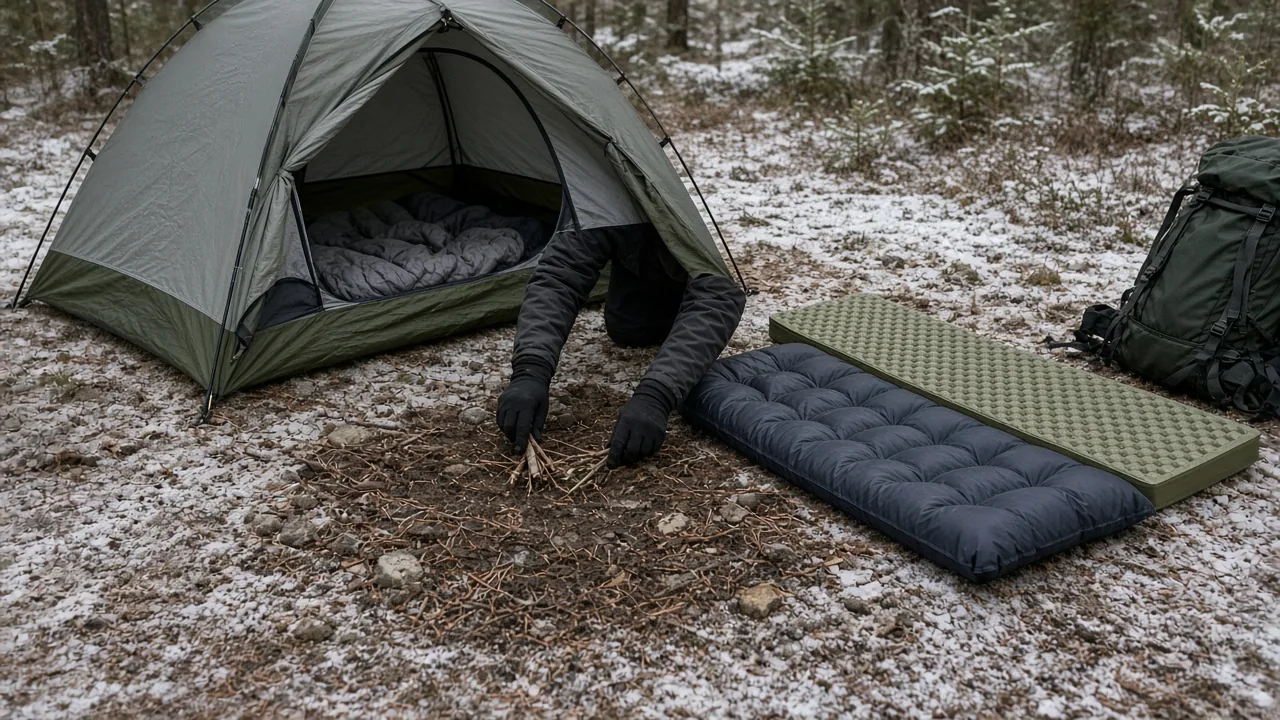
Inspect, inflate, and store your pad correctly for winter. Keep fuel-burning appliances outside the tent at all times. Never use a stove or heater inside your tent because of carbon monoxide and fire risk.
Before You Leave
Check the forecast and your own cold tolerance before choosing a pad. Inflate each pad at home to check for slow leaks, and confirm that the R-value matches the expected lows. A pad rated R-2 is not enough for a forecast of 15°F, no matter how warm your sleeping bag is.
If you are using a new air pad, practice inflating it once at home. Make sure the valve seals correctly and that the pad stays firm for several hours. Pack the repair kit and know how to use it. In cold weather, a leak that would be annoying in summer can become dangerous.
At Camp
Clear sharp objects from the site before you lay down a pad. Check for sticks, pine needles, small stones, and any metal or glass fragments. A tiny puncture can ruin an air pad overnight.
Use an inflation bag or pump instead of mouth inflation. Blowing warm, moist breath into a pad can introduce moisture, and the air inside can cool and shrink during the night, leaving the pad softer. Inflate the pad until it supports your hips and shoulders without bottoming out, but not so firm that it feels like a drum.
Keep fuel-burning appliances outside the tent at all times. Never use a stove or heater inside your tent, even for a few minutes. Carbon monoxide is odorless and can build up quickly in a closed space, and stoves and heaters can ignite tent fabric or sleeping bags.
Storage and Long-Term Care
Store self-inflating pads with the valve open and the pad laid flat when possible. Long-term compression can keep the foam from re-expanding fully, which reduces both thickness and warmth over time. If you cannot store a pad flat, loosen the valve and let it breathe between trips.
Avoid leaving closed-cell foam pads in prolonged direct sun for weeks at a time. Heat and UV exposure can degrade the foam and reduce its rebound. When you get home, dry any pad that was wet or damp, especially before storing it compressed.
Before you pack for the next trip, check whether the pad’s R-value matches the overnight low, whether you are car camping or backpacking, and whether rain or snow is likely. If the forecast is near freezing or below, a foam pad alone probably is not enough. When in doubt, stack a closed-cell foam pad under an insulated air pad rather than trusting foam alone.
This article is general information about camping gear, not professional safety, medical, or wilderness training. Check fire restrictions, weather, and campsite rules before you go, and follow the manufacturer's instructions for your own equipment.
FAQ
What R-value do I need for winter camping?
For snow, frozen ground, or nights near or below 20°F, choose a pad with an R-value of 5 or higher. Sleeping bag temperature ratings are tested on a pad rated R-4.8, so lower R-values make the bag feel colder.
Can I use a foam sleeping pad in winter?
A closed-cell foam pad alone is usually not enough below about 41°F. You can stack it under an insulated air pad to raise total R-value and add puncture protection.
How do I make a foam pad warmer for winter camping?
Stack the foam pad on the ground and place an insulated air pad on top, because R-values add together. This also protects the air pad from sharp objects and gives you a backup if the air pad fails.
Should I inflate a sleeping pad with my mouth in cold weather?
No, use an inflation bag or pump instead of mouth inflation. Moist breath can get inside the pad, and cold nighttime air can cause the pad to lose firmness as the air inside contracts.
What is the best sleeping pad for snow camping?
An insulated air pad with an R-value of 5 or higher is a safer choice for snow and deep cold. For extreme cold, some insulated air pads reach R-values above 7.



