Airscape Canister Review for Camping: Is It Worth It?
The Airscape canister is a useful dry food storage upgrade for car camping, with a press-down lid that pushes excess air out. It fits drawer-style camp kitchens but won't chill fresh food or replace bear-resistant storage.
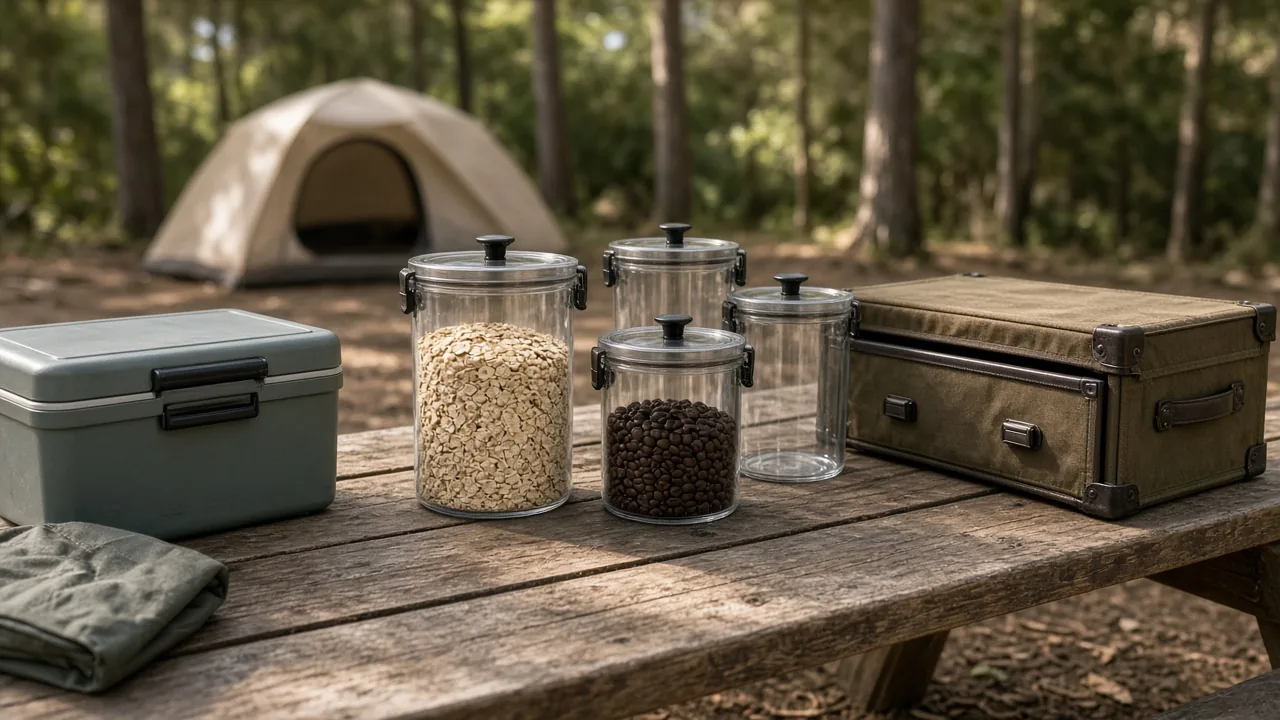
For car camping dry food storage, an Airscape canister is a useful but not essential upgrade. The press-down lid pushes excess air out, and the clear body lets you see when oats, rice, or coffee are running low. It earns its space in a drawer-style camp kitchen, but it will not chill fresh food or replace a bear-resistant container. This Airscape canister review for camping covers when the canister makes sense and when a basic bin is enough.
Airscape Canister Review for Camping: How the Lid and Seal Work
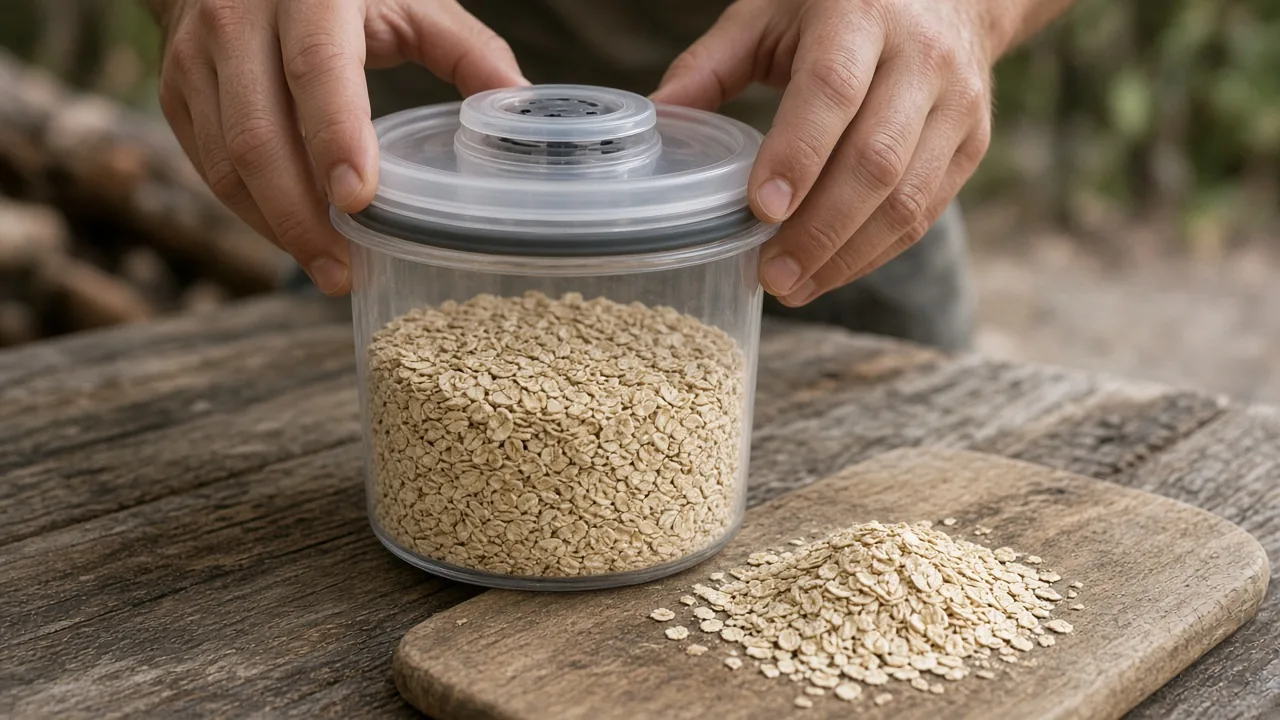
The useful part of the Airscape is the plunger-style lid. Instead of a simple snap or screw top, the lid has a one-way valve and a rubber gasket around the base. You press the plunger down as the food level drops, which pushes air out through the valve and keeps the seal snug against the contents.
To load it, you pour dry food into the clear body, set the plunger lid on top, and pump it up and down a few times. Air leaves the canister, but outside air does not flow back in because the valve is one-way. When you use some oats or coffee, you press the plunger lower before closing the lid again.
That process does not create a true vacuum like a powered vacuum sealer. It does reduce the amount of oxygen sitting against dry food, which is the main reason some campers prefer it over ordinary storage containers.
What dry foods make sense inside
Airscape canisters work best for dry pantry items you open repeatedly. Oats, rice, coffee, noodles, instant soup mix, milk powder, protein powder, dried fruit, nuts, and beef jerky all fit the intended use. Crush-prone foods such as instant noodles, crackers, flatbreads, or pie shells also benefit from the rigid body.
Do not expect the canister to handle fresh meat, seafood, dairy, most vegetables, or heat-sensitive chocolate. Those items still need a cooler, ice packs, or shaded storage. Hard cheese can travel in a cooler or insulated bag, but it is not a dry-food item for this canister.
Drawer fit and bulk
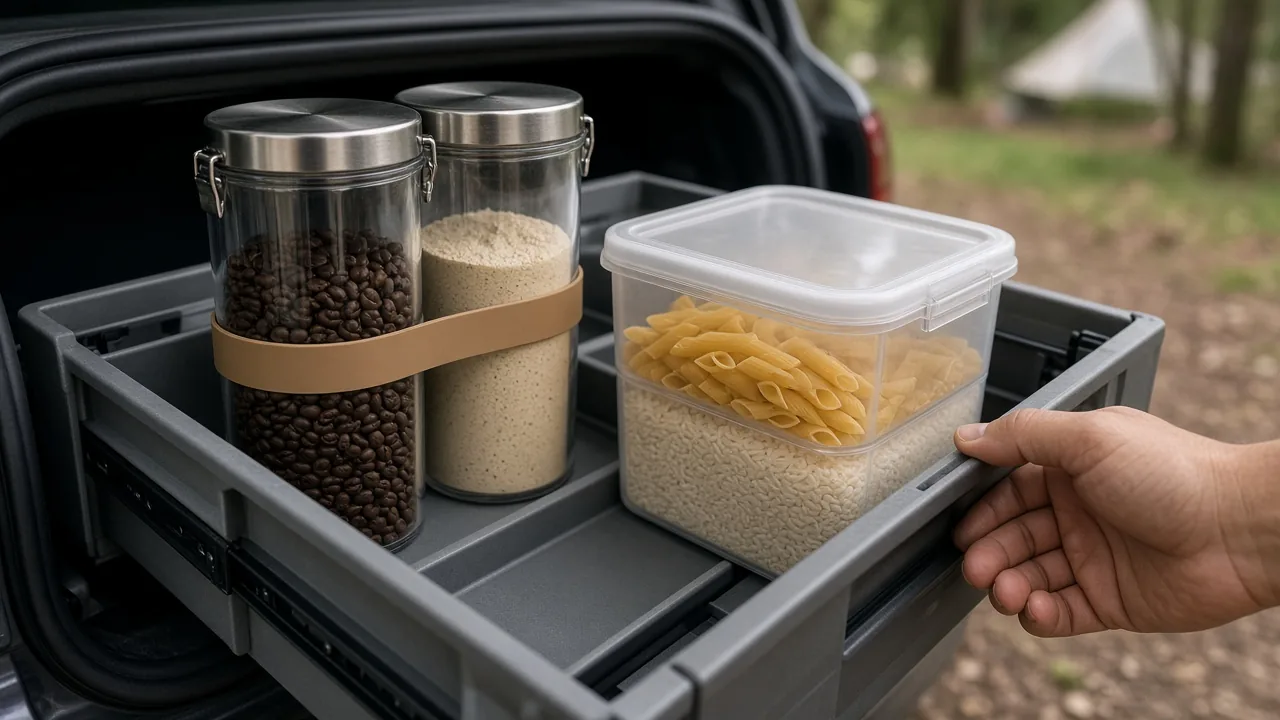
The cylindrical shape works well in a car camping drawer system. Because the body is clear, you can identify rice, coffee, or oats without pulling every container out. A heavy rubber band can join two canisters together, which helps reduce rattling and sliding.
When stored loose inside a large bin or tote, the round footprint can feel bulky. Some owners report that the canister only feels manageable when it fits into a dedicated drawer or shelf. Square stackable bins use packed space more efficiently, especially on short trips where you do not need the plunger seal.
Reported Strengths for a Car Camping Kitchen
The two strengths most owners call out are the airtight seal and the press-down plunger. Both features help keep dry goods fresher on longer trips. The rigid body also protects fragile dry food from getting crushed inside a packed vehicle.
Airtightness compared with ordinary containers
A basic snap-lid bin may keep dust and bugs out, but air can still move through the small gap around the lid. The Airscape uses a rubber base gasket and a one-way valve, which provides a tighter seal. In humid conditions or on multi-day trips, that difference matters more.
For a one- or two-night car camping trip in mild weather, many campers will not notice a practical difference between an Airscape and a good square airtight bin. The upgrade becomes easier to justify when you carry dry goods through dusty roads, high humidity, or repeated daily opening.
Stacking and visibility
The clear canister body is a small but real benefit. You can see coffee versus oats versus rice without opening every lid, which reduces the number of times air gets into the container. The rubber band that pairs two canisters also keeps the camp kitchen drawer from turning into a jumble.
That visibility is more valuable when you have several similar-looking dry goods. If you repack everything into identical black bins, labels can fall off or become hard to read in low light. The Airscape removes that guesswork for a few core staples.
Drawbacks and When a Basic Bin Is Enough
The main trade-off is cost and rigid size. Some owners argue that OXO or store-brand airtight containers handle typical car camping just as well. If your menu is simple and your trip is short, the plunger seal may be unnecessary.
Cost and packed space
Airscape canisters cost more than basic food storage bins, and that price difference is not small when you need several containers. The round footprint also leaves empty space in square packing cubes or plastic totes. Stackable square bins pack more tightly and are easier to wedge into a trunk.
If you only need to keep pancake mix and instant coffee dry for a weekend, a basic bin with a tight snap lid gets the job done. The Airscape becomes a better value when you store dry food for many days and want less rebagging at camp.
What an Airscape will not replace
The canister is not a cooler. It does not chill meat, seafood, vegetables, dairy, or eggs. Heat-sensitive chocolate will still melt inside a warm vehicle, regardless of whether the lid is airtight. For those foods, you still need a rotomolded cooler, a foam box with ice packs, or another form of cold storage.
Think of the Airscape as a pantry organizer, not a food preservation system for perishables. It can keep oats dry, but it will not slow spoilage on fresh chicken or cheese.
Bear and campsite rules
Airscape canisters are not bear-resistant. Do not treat them as approved bear canisters in areas that require hard-sided bear-safe food storage. Check bear-safe storage rules, fire restrictions, and campsite requirements before relying on any container in bear country.
In some campgrounds, food must go into a provided bear box or a locked vehicle. A sealed kitchen canister is not a substitute. Always follow local rules for scent management and trash disposal.
Who Should and Should Not Pack Airscape Canisters
The Airscape suits car campers with multi-day dry food kits, humid or dusty routes, and dedicated drawer kitchens. It is less useful for one-night trips and poor for backpacking, where weight and pack size matter more.
Good fit
If you repeatedly open coffee, oats, rice, milk powder, or protein powder and want less rebagging, the press-down seal can keep your camp kitchen organized. The rigid body also helps protect noodles, crackers, and other crush-prone items while driving on washboard roads.
Car campers who use a drawer system or a kitchen box with fixed compartments get the most from the canister. The clear body and the ability to press the lid down as food decreases both fit a setup where you cook at camp multiple days in a row.
Poor fit
Backpackers counting ounces should skip this canister. The rigid body and plunger lid add weight and bulk that do not belong in a backcountry pack. For backpacking, lighter bags, zip-top pouches, or a compact bear canister make more sense.
Minimalist car campers with simple menus may also prefer square bins or a single cooler for all food. If you only need granola, tortillas, and a few snacks for one night, the Airscape is more organization than the trip requires.
Alternatives and Buying Advice
Choose an Airscape for frequently opened dry staples that need crush protection. Use standard airtight bins for short trips, and pack a cooler or foam box for fresh items. Keep fuel appliances outside enclosed spaces, and follow the manufacturer’s instructions for every stove or heater.
| Storage option | Dry goods protection | Crush protection | Cooling | Weight and bulk | Car camping fit | Backpacking fit |
|---|---|---|---|---|---|---|
| Airscape canister | Strong airtight seal with one-way valve | Good for noodles, crackers, pies | None | Heavier rigid cylinder | Good in drawer systems | Poor, too heavy |
| Square airtight bin | Good snap seal, less robust | Moderate | None | Light, stackable | Excellent for short trips | Marginal if light plastic |
| Cooler or foam box with ice packs | Not for dry pantry food | Limited | Yes for meat and produce | Heavy when loaded | Essential for fresh food | Poor unless very light cooler |
Lower-cost dry storage
OXO or store-brand airtight bins, zip-top bags inside a hard case, or square containers work for one- to three-night trips. They cost less and pack more efficiently in a trunk or tote. For short trips, the practical difference in food freshness is usually small.
If you want extra crush protection without buying a specialty canister, put fragile dry food in a zip-top bag and then inside a rigid plastic box. That gives you some of the same benefit for less money and a more stackable shape.
Cooler and ice-pack pairing
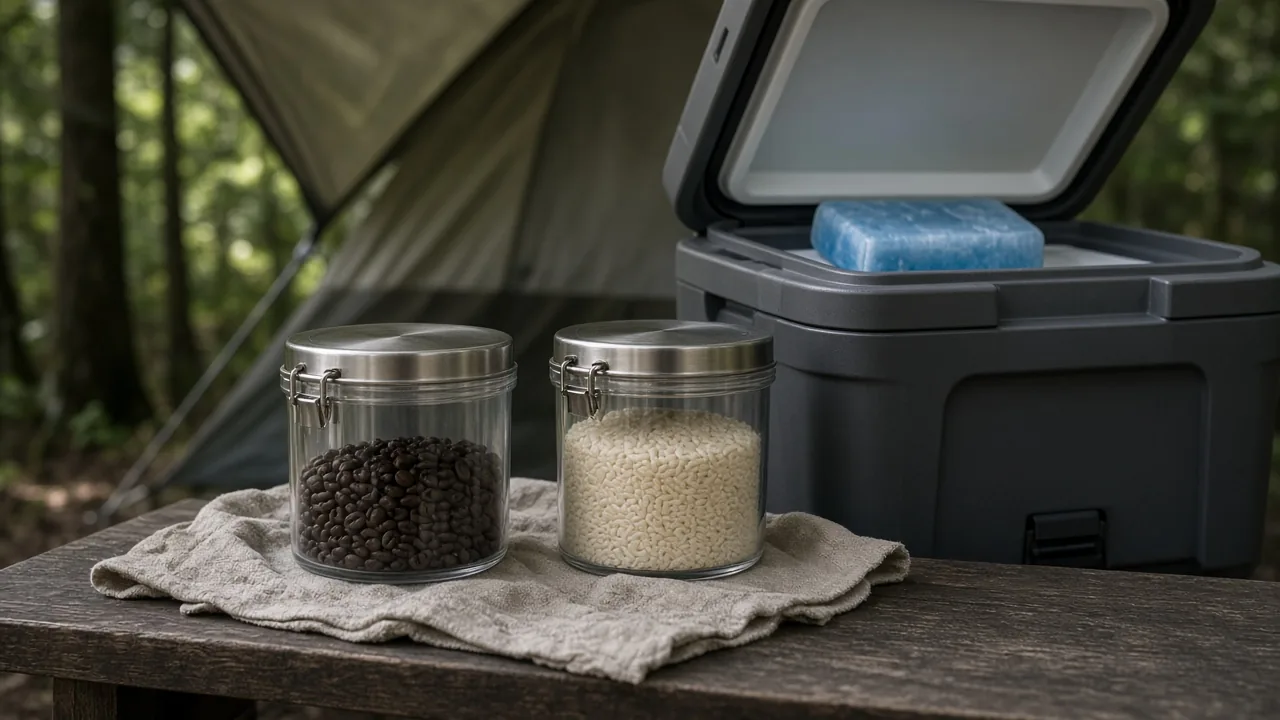
Use a rotomolded cooler, a soft cooler, or a foam box with ice packs for meat, vegetables, water, and dairy. Keep Airscape canisters for pantry-style dry food only. That split helps you avoid opening the cooler too often and keeps melting ice away from coffee and oats.
In warm weather, place the cooler in the shade or under a vehicle, not on a hot trunk floor. Drain excess water only when needed, and keep raw meat sealed separately from ready-to-eat food.
Camp kitchen safety reminder
Never use a stove or heater inside your tent. Carbon monoxide builds up quickly in an enclosed space, and a fuel appliance can ignite fabric, sleeping bags, or tent walls. The same rule applies to charcoal grills and any other fuel-burning device.
Keep stoves and heaters outside and away from tent doors, dry grass, and low branches. Follow the manufacturer’s instructions for every fuel appliance, and let a stove cool before packing it into a vehicle.
Before packing, check the trip type, nighttime lows, rain chance, and fire restrictions. If dry food organization outweighs the cost and bulk, Airscape canisters fit a longer car camping kitchen. For short or simple trips, basic bins and a cooler are usually enough.
This article is general information about camping gear, not professional safety, medical, or wilderness training. Check fire restrictions, weather, and campsite rules before you go, and follow the manufacturer's instructions for your own equipment.
FAQ
Is the Airscape canister airtight?
It uses a one-way valve and rubber gasket to push air out when you press the plunger lid. It reduces oxygen against dry food but is not a true vacuum sealer.
Can an Airscape canister keep food cold?
No. Airscape canisters are not coolers and will not chill meat, dairy, vegetables, or eggs. They are for dry pantry foods only.
What foods should you store in an Airscape canister for camping?
Store dry items like oats, rice, coffee, noodles, milk powder, protein powder, nuts, and jerky. Crush-prone foods like crackers and instant noodles also benefit from the rigid body.
Is the Airscape canister bear-resistant?
No, it is not bear-resistant and should not replace an approved bear canister where required. Follow local food storage and campsite rules in bear country.
Is an Airscape canister good for backpacking?
No. It is too heavy and bulky for backpacking, where lighter bags or compact bear canisters are better options.



