Are Water Purification Tablets Enough for Backpacking?
A practical guide to when water purification tablets are enough for backpacking, when to add a filter, and what tablets can and cannot remove.
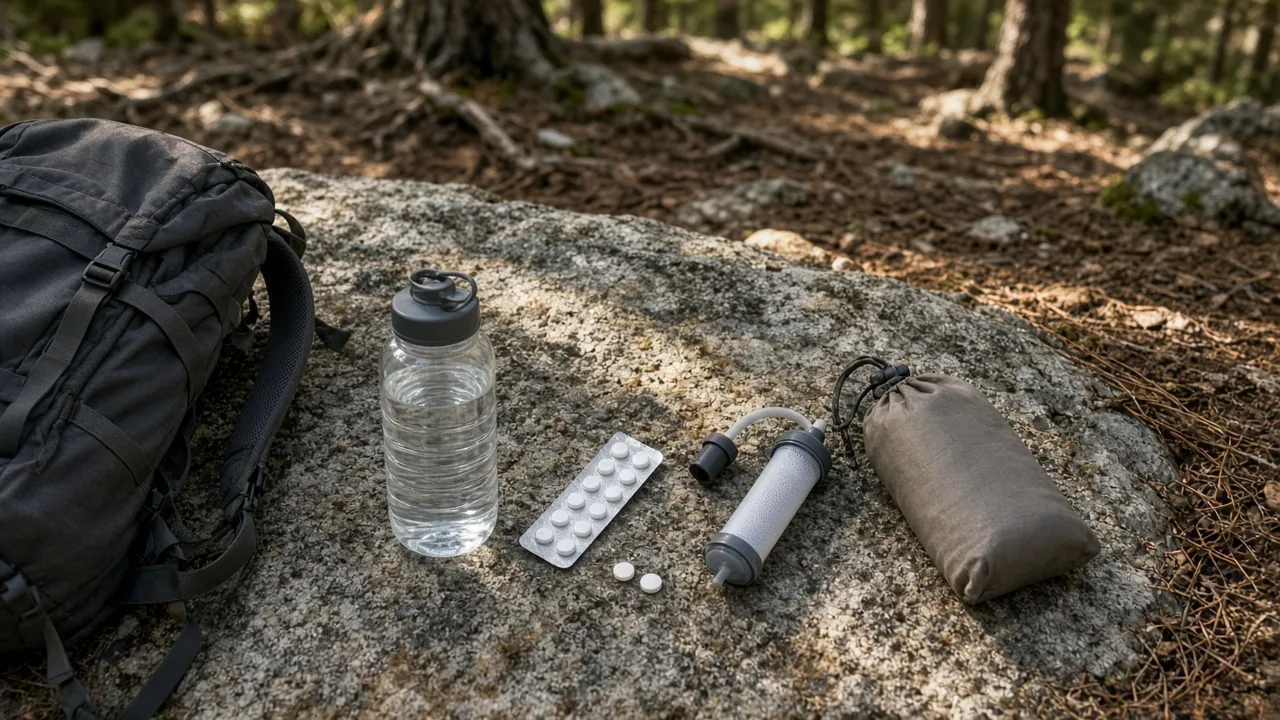
Are water purification tablets enough for backpacking? The short answer is that tablets alone work only when the water source is clear and you can accept a 33- to 40-minute wait before drinking. For most trips, they belong in your pack as a nearly weightless backup next to a hollow-fiber filter, not as the primary method. This guide walks through when tablets are enough, when to pair them with a filter, and what each option actually removes.
1. Are Water Purification Tablets Enough for Backpacking? The Short Answer
Chemical tablets such as Aquatab and Potable Aqua kill bacteria, cysts, and viruses, but they do not filter anything out of the water. That distinction matters more than most hikers expect. Tablets are enough only when the water is already clear and the trip is short enough that a 33- to 40-minute wait per bottle is acceptable. Otherwise, treat them as backup, not as your main line of defense.
When tablets alone make sense
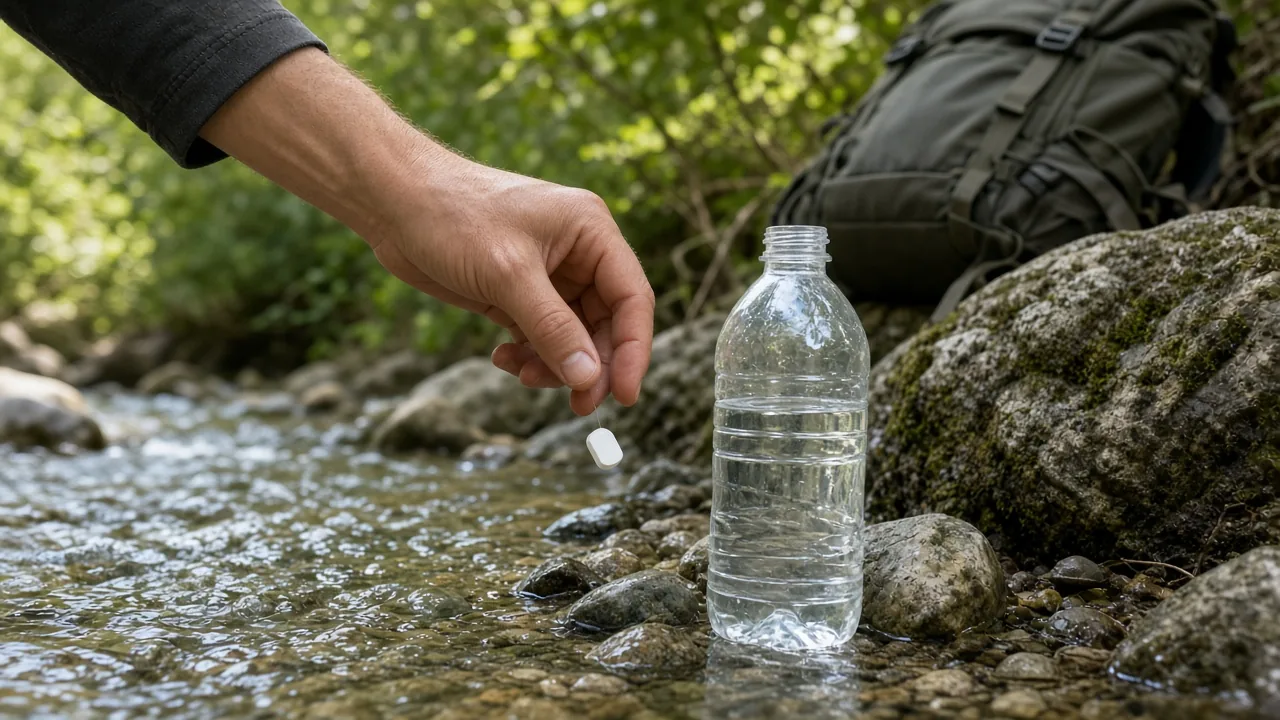
Tablets make sense for gram-conscious trips, clear streams or treated tap water, and as an emergency layer when a filter fails or freezes. A full strip of nine tablets can register as zero weight on a backpacking scale, which no filter can match. If you are hiking a well-used trail with clear water sources and you can stop long enough to let the tablets work, they can handle the job. They also make sense tucked into a personal survival kit, where three tablets can treat roughly 50 ounces of water in an emergency.
When they do not make sense
Tablets are not enough for cloudy water, chemical pollution, or when you need fast, better-tasting water at a high flow rate. If you are filtering water for two or more people all day, the wait time alone rules tablets out as a primary method. If the water has visible sediment, tablets can lose effectiveness because suspended particles shield microorganisms from the chlorine or iodine. And if you are near agricultural runoff, mining areas, or any water source with potential chemical contamination, tablets do nothing for pesticides or heavy metals.
2. When to Pair Water Purification Tablets with a Filter
Pair tablets with a filter when water is cloudy, has visible debris, or comes from an area with virus risk. Many mechanical filters such as the Katadyn BeFree and Sawyer Squeeze remove bacteria and protozoan cysts but do not remove viruses. Tablets, by contrast, are effective against viruses but cannot clear sediment or chemical pollution. Carrying both covers more failure modes than either one alone.
The main-plus-backup system
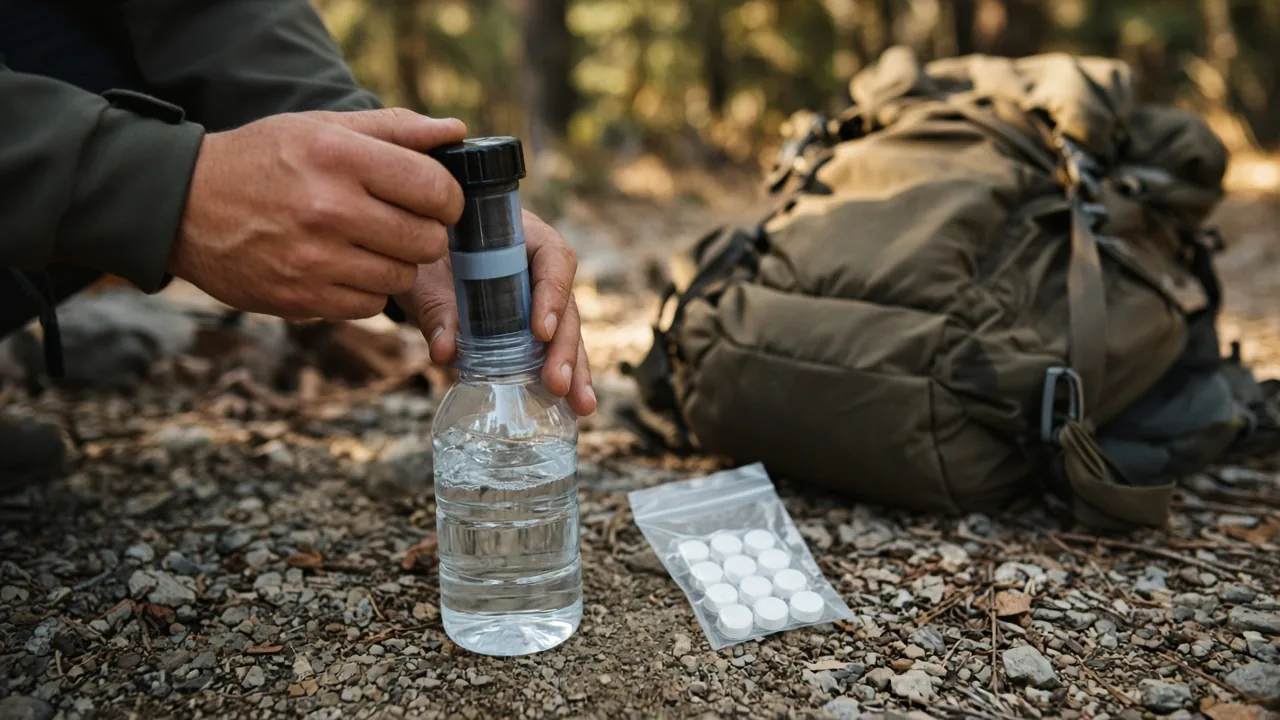
A practical lightweight setup is to carry a hollow-fiber filter as the primary method and tablets as the zero-weight backup. One backpacker can carry a Katadyn BeFree, which weighs about 3.9 ounces, while a partner carries a Sawyer Squeeze system with its bag at roughly 6.1 ounces. The tablets go in an emergency pocket and only come out if a filter freezes, a soft water bag tears, or a filter gets clogged. This system gives you two filtration methods plus a chemical backup without adding meaningful pack weight.
Multi-step treatment for suspect water
For very dirty water, strain it through fabric first, then run it through a filter, then use tablets. Boiling remains the safest final step when fuel and time allow. If you encounter water with a dead animal upstream or heavy discoloration, one pass is not enough. Pre-filter through a bandana or fine cloth to remove sediment, send the water through your filter, and finish with a tablet or a rolling boil. This layered approach is what hikers in the backcountry commonly recommend when the source is visibly questionable.
3. How to Use Water Purification Tablets: Steps, Wait Times, and Taste
Aquatab requires shaking the bottle for about 10 minutes and then waiting 30 minutes, while Potable Aqua needs two primary tablets, a 30-minute wait, and a neutralizer tablet. Both leave a noticeable taste. The precise steps matter because cutting the wait short can leave active microorganisms in your water.
Aquatab procedure
Drop one Aquatab tablet into the bottle, shake for about 10 minutes, then wait 30 minutes before drinking. The manufacturer's packaging warns against letting the tablet touch your hands or clothing, which makes opening and handling the strip in the field awkward. Some hikers report that the tablet may not fully dissolve by the time the wait ends, even though the instructions say the water is ready. In a side-by-side trail comparison, the treated water smelled like a swimming pool.
Potable Aqua procedure
Add two primary tablets, wait 30 minutes, then add one neutralizer tablet and wait about 3 minutes. The neutralizer is designed to reduce the iodine taste, but it does not eliminate it. One advantage of Potable Aqua is that the packaging does not carry the same hand-contact warning as Aquatab, though washing your hands after handling any chemical tablet is a sensible habit. Total time is about 33 minutes or more depending on how quickly you move between steps.
Realistic taste expectations
Aquatab water tastes like pool water, and Potable Aqua has a metallic edge even after the neutralizer step. In a trail taste comparison, neither option was pleasant enough to drink voluntarily, but the chlorine profile of Aquatab was slightly easier to tolerate than the iodine metallic note. The takeaway is straightforward: tablets are an emergency solution, not a flavor upgrade. If you drink chemically treated water regularly, it helps to know which taste you can tolerate before you are actually thirsty.
4. What Tablets Cannot Do: Sediment, Chemicals, and Parasites
Chemical tablets are not filters. They do not remove sediment, pesticides, heavy metals, or chemical pollution. Their effect on parasite eggs is not clearly established in the available sources, which is a real concern for backcountry hikers. If you are treating water that contains anything you would not want floating in your bottle, you need a physical filter or boiling in addition to tablets.
Sediment and cloudy water
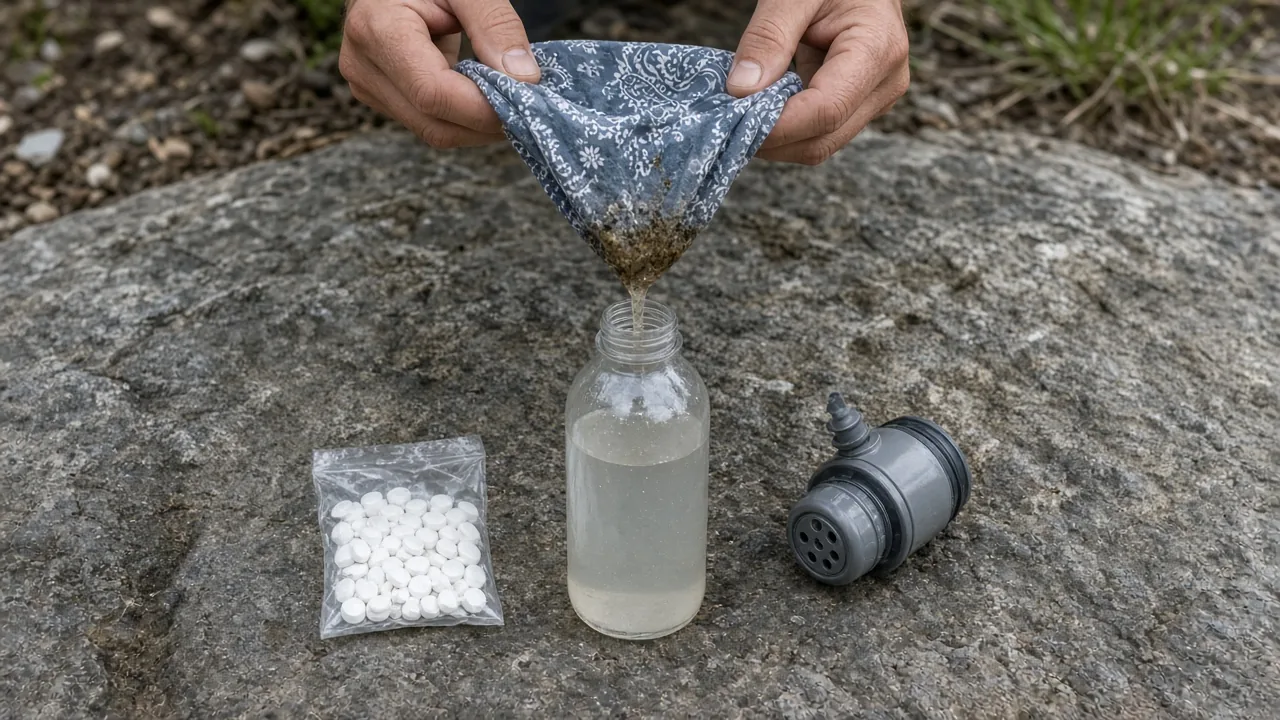
If water is cloudy or full of suspended material, strain it through fabric or a filter first. Sediment can reduce chemical treatment effectiveness because chlorine and iodine work less reliably when they have to reach microorganisms hidden inside particles. A pre-filter step through a bandana, shirt, or dedicated pre-filter fabric also extends the life of any mechanical filter you use afterward. Clear water is always the better starting point for chemical treatment.
Chemical pollution and parasites
Do not rely on tablets for chemical runoff or heavy metals. If you are near farmland, old mine sites, or urban drainage, use a dedicated treatment system with a heavy-metal filter or boil when possible. The same caution applies to parasite eggs, which are not reliably killed by standard chemical tablets. Boiling is the most consistent method for dealing with parasites, viruses, and bacteria in one step, but it requires fuel and time.
5. How to Choose Water Purification Tablets
Choose EPA-registered or equivalent certified tablets, compare chlorine versus iodine taste and handling cautions, and check the required dose, wait time, and packaging for your bottle size. A tablet that works in a 16-ounce bottle may need a different dose in a 2-liter bladder. The best tablet for you depends on whether you prioritize taste, wait time, or simplicity.
Certification and dose
Look for EPA registration or an equivalent recognized approval, and follow the package dose for your water volume instead of guessing. Certification confirms that the tablet has been tested against the microorganisms it claims to kill. Guessing on dose can leave water under-treated or leave you with excess chemical taste. Always read the package instructions before the trip, not after you have already filled your bottle.
Taste and handling tradeoffs
Aquatab is nearly weightless but smells like chlorine, and the packaging warns against skin contact. Potable Aqua uses iodine and a neutralizer but still tastes metallic, with no prominent hand-contact warning. In one comparison, a hiker concluded they would not drink either option by choice, but would pick Aquatab in an emergency. Choose the tradeoff that fits your trip: if you want slightly faster treatment, Potable Aqua edges ahead; if you can wait 40 minutes and want marginally less offensive flavor, Aquatab may be your pick.
Use a comparison table
The table below rates systems by packed weight, wait time, what they remove, freeze or water exposure risk, and whether they suit car camping or backpacking.
| System | Packed weight | Wait time | What it removes | Freeze or water exposure risk | Best suited for |
|---|---|---|---|---|---|
| Katadyn BeFree | About 3.9 oz | Immediate | Bacteria, protozoan cysts | Freeze damages filter; pouch can tear | Backpacking |
| Sawyer Squeeze system | About 6.1 oz with bag | Immediate | Bacteria, protozoan cysts | Freeze damages filter; bag can leak | Backpacking |
| Aquatab tablets | Essentially 0 oz for nine tablets | About 40 min | Bacteria, viruses, cysts | Moisture can ruin tablets; keep sealed | Emergency backup |
| Potable Aqua tablets | Essentially 0 oz for a strip | About 33 min | Bacteria, viruses, cysts | Moisture can ruin tablets; keep sealed | Emergency backup |
| Boiling | Stove and fuel dependent | Varies, plus cooling | Bacteria, viruses, parasites | No freeze risk; fuel and stove failure possible | Car camping or backup |
6. How to Store and Care for Tablets and Filters
Keep tablets sealed and labeled in a dry pouch, protect filters from freezing by sleeping with them in your bag or jacket, and inspect soft water bags for leaks before each trip. Neglect on any of these fronts can leave you without a working water treatment system when you need it most.
Tablet storage
Seal tablets in a small waterproof container, label it for quick access, and keep it away from moisture so the tablets stay usable in an emergency kit. A survival kit that gets damp can ruin chemical tablets without visible damage, so a dry pouch or sealed pill box is worth the half-ounce. Keeping a strip of tablets next to your first-aid kit also means you can find them quickly when you are tired, cold, or dealing with a failed filter.
Filter care in cold weather
A frozen hollow-fiber filter can be ruined, so store it in a sleeping bag or jacket at night and follow the manufacturer's backflush and inspection instructions. Hollow-fiber membranes crack when water inside them freezes, and the damage may not be visible. If you are expecting overnight lows near or below freezing, treat your filter like a camera battery or a fuel canister: keep it warm against your body.
7. Car Camping vs Backpacking: What to Pack and What to Leave
Backpacking favors a lightweight filter plus tablets as a backup, while car camping can justify a larger filter or boiling because weight and packed size matter less. The trip context changes what counts as a sensible water treatment setup.
Backpacking setup
A BeFree or Sawyer system plus a strip of tablets keeps water treatment around 4 to 6 ounces while covering most bacteria, protozoa, and filter-failure risk. That is a small weight penalty for a meaningful safety margin. Two hikers sharing a trip can split the systems, with one carrying the BeFree and the other the Sawyer, so no single person carries both filters. Tablets ride along as the last-resort layer that costs almost nothing in weight.
Car camping setup
You can pack a higher-capacity filter, extra fuel for boiling, and larger water containers, because comfort and convenience matter more than ounces. A big water jug, a pump-style filter, and a camp stove with plenty of fuel give you multiple treatment paths without worrying about pack weight. If water quality is uncertain, boiling a full pot on a two-burner stove is far more practical at a developed campground than on a ridge at 10,000 feet.
Safety when boiling
If you boil water as a backup or primary treatment, do it outside on a camp stove. Never use a stove or heater inside your tent. Carbon monoxide builds up quickly in enclosed spaces, and flame near tent fabric creates a direct fire risk. This rule applies to every fuel appliance, including backpacking stoves, canister stoves, liquid-fuel stoves, and any improvised heating setup. Boil long enough for a rolling boil, let the water cool, and keep the stove on stable ground away from dry vegetation.
Before packing, check whether tablets alone are worth bringing based on whether the trip is car camping or backpacking, roughly how cold the nights get, and whether rain or turbid water is likely. A filter plus tablets is the safer lightweight default, but car campers can lean on boiling and larger containers when weight is not a concern.
Camp Kit Journal Editorial Team
This article is general information about camping gear, not professional safety, medical, or wilderness training. Check fire restrictions, weather, and campsite rules before you go, and follow the manufacturer's instructions for your own equipment.
FAQ
Are water purification tablets effective against viruses?
Yes, chemical tablets such as Aquatab and Potable Aqua kill viruses, bacteria, and cysts. Many mechanical filters do not remove viruses, which is why pairing both covers more risks.
How long do water purification tablets take before water is safe to drink?
Aquatab requires about 40 minutes total including shaking and waiting, while Potable Aqua needs about 33 minutes plus a neutralizer step. Cutting the wait short can leave active microorganisms.
Can I use water purification tablets in cloudy or sediment-filled water?
Tablets are less effective in cloudy water because suspended particles can shield microorganisms from chlorine or iodine. Pre-filter through fabric or use a filter first, then treat clear water with tablets.
Do water purification tablets remove sediment, chemicals, or heavy metals?
No, tablets are not filters and do not remove sediment, pesticides, heavy metals, or chemical pollution. For those risks you need a physical filter, a dedicated heavy-metal treatment system, or boiling.
What is the best water treatment setup for backpacking?
A hollow-fiber filter as the primary method plus water purification tablets as a zero-weight backup is a practical lightweight default. This covers bacteria and protozoa through the filter and viruses or filter failure with tablets.