Are Titanium Camping Utensils Worth It? A Practical Guide
Titanium camping utensils can be worth the price for weight-conscious backpackers who want a full rust-resistant kit, but most car campers and budget buyers are better served by stainless steel, aluminum, or folding silicone.
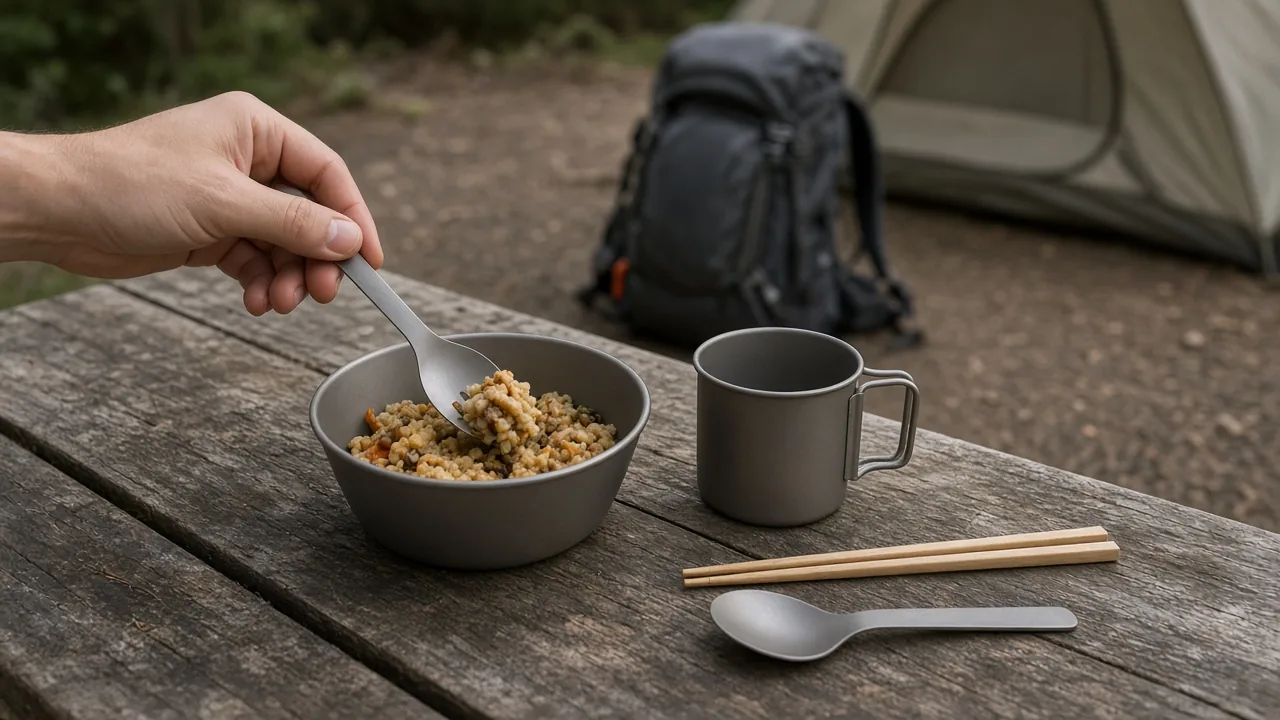
Titanium camping utensils are worth the higher price mainly for backpackers who replace a full kit and want corrosion resistance, but most car campers and budget-focused campers get better value from stainless steel, aluminum, or folding silicone. The honest answer to "are titanium camping utensils worth it" depends less on the metal itself and more on how you camp, how much weight you actually need to cut, and whether a few ounces saved per item justifies a much higher price.
Are Titanium Camping Utensils Worth It for You?
The answer changes with trip style. Titanium makes sense when you need a full set of lightweight, rust-resistant items for backpacking, but single pieces rarely save enough weight to justify the cost for car camping.
If you drive to a campground and set up a full kitchen on a picnic table, the difference between a 60-gram titanium bowl and a 120-gram stainless steel bowl is close to irrelevant. Your vehicle is carrying the weight, not your back. If you are hiking several miles with everything on your shoulders, those same weight reductions add up across a plate, bowl, mug, fork, spoon, and chopsticks.
Think about the total package, not the individual item. One titanium spoon might save less than an ounce over stainless steel. That is not a meaningful difference. A complete titanium eating kit can save several ounces, and for a long-distance backpacker counting every ounce, that may matter.
What Do Titanium Utensils Weigh Compared With Other Materials?
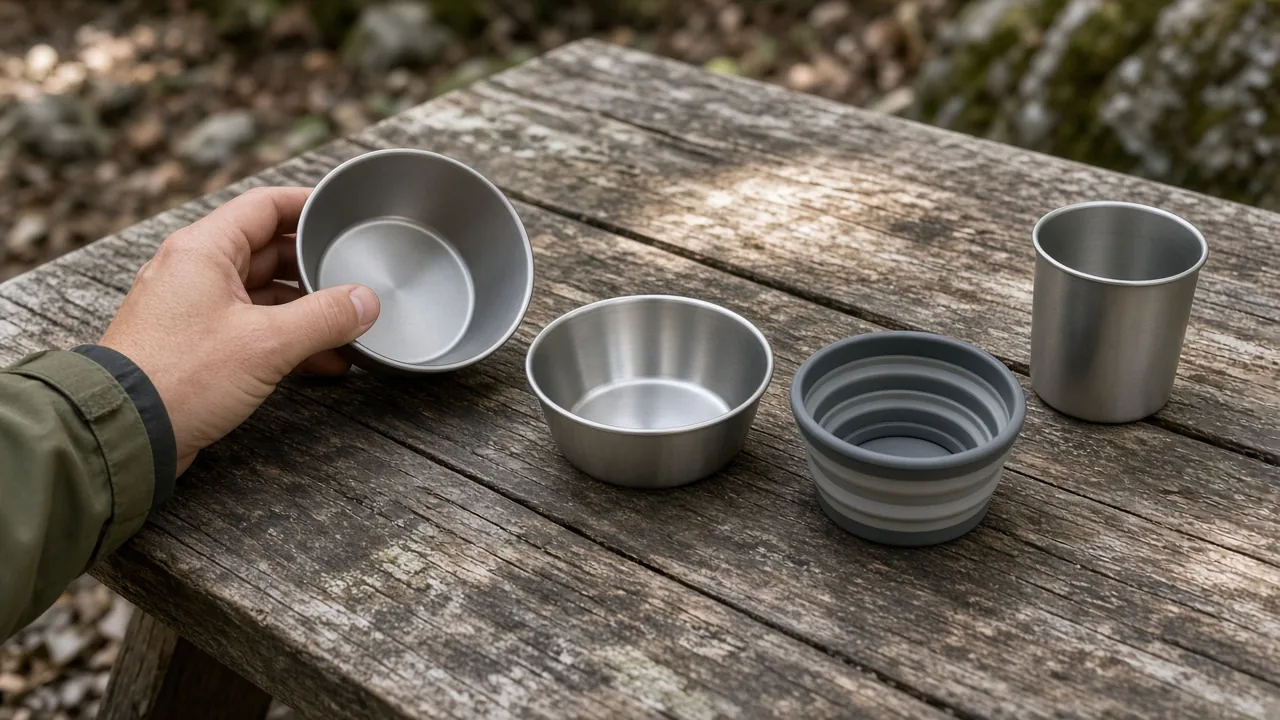
A 300 ml titanium bowl weighs about 60 grams, while a similar stainless steel bowl weighs about 120 grams. That is roughly half the weight. On paper, that sounds like an easy win. In practice, the picture gets more complicated when you consider plastic and silicone alternatives.
Utensils have no R-value and no waterproof rating to compare. The real material differences come down to weight, heat transfer, rust resistance, and how each one fits your style of camping.
Titanium vs. Stainless Steel, Aluminum, and Plastic
The comparison below is based on reported weights, general material behavior, and comments from campers who have used these items. It should not be read as a promise that every product will behave exactly this way.
| Material | Weight | Heat Transfer | Rust Resistance | Best Fit |
|---|---|---|---|---|
| Titanium | Lightest metal option; about half the weight of stainless | Poor; food scorches easily | Excellent; resists rust well | Backpacking, humid or wet trips |
| Stainless steel | Moderate; about 120 g for a 300 ml bowl | Moderate | Good, especially 304 stainless | Car camping, budget buyers |
| Aluminum | Light, close to titanium for simple utensils | Excellent for cookware | Good, but surface needs gentle care | Car camping cookware, budget kits |
| Plastic/silicone | Lightest overall; collapsible silicone packs flat | Very low; unsuitable for hot cookware | No rust issue | Car camping, space-saving, lightweight thrift |
Aluminum conducts heat better than titanium, which makes it more practical for pots and pans. It also needs gentle cleaning. Avoid steel wool on aluminum because it can damage the surface. Plastic and folding silicone remain the lightest options for bowls and cups, and a collapsible silicone bowl takes up far less packed space than any rigid metal bowl.
Why Do Some Campers Say Titanium Is Not Worth the Price?
The strongest pushback on titanium comes from campers who have used it in the field. They point out that titanium costs much more than 304 stainless steel or aluminum, conducts heat poorly for cookware, and can scorch food or warp if cooled too fast.
Another common criticism is that titanium utensils are often bought as single showpieces rather than practical kits. One titanium spork in a camp kitchen full of stainless steel and plastic saves almost no weight and adds little function. The value appears only when you commit to a full titanium setup, and even then the weight savings may not feel dramatic on a short overnight trip.
Titanium Pots and the Burnt Food Problem
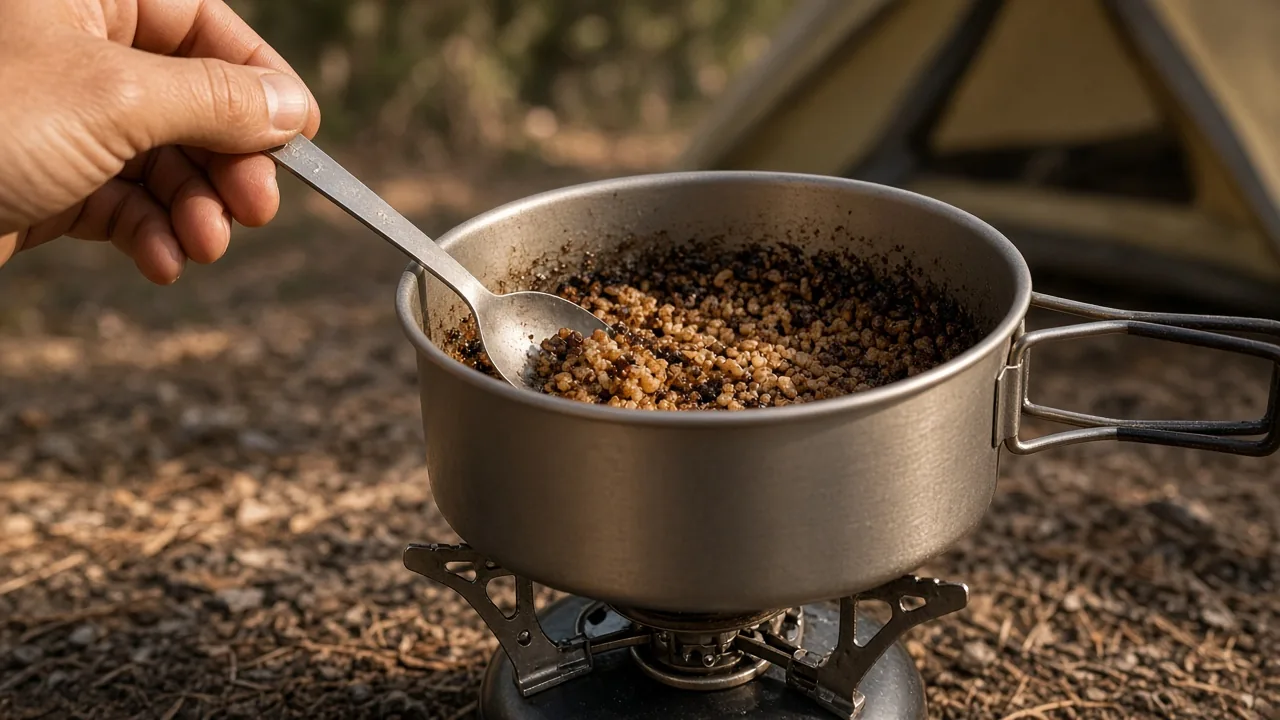
Because titanium has poor heat transfer, rice and other starchy foods scorch easily in titanium pots. Heat concentrates in spots instead of spreading evenly across the bottom, which creates hot zones that burn whatever sits there. Stainless steel spreads heat more evenly, and aluminum is better still.
There is also a durability concern with thin titanium pieces. Titanium products are often made thin to save weight and cost. If you pour cold water into a very hot titanium pot or immediately dunk a heated titanium bowl into a cold stream, the rapid temperature change can deform the thin metal.
Are Titanium Utensils More Hygienic and Long-Lasting?
Titanium resists rust, inhibits bacteria, and has high strength relative to its weight. In wet or humid conditions, that rust resistance is a real advantage over some steels. One camper reports that a titanium cup still looks new after three years of regular use.
Those advantages may not matter much on short trips. A stainless steel fork can also survive years of weekend car camping without rusting, as long as it dries before storage. The hygiene benefit of titanium matters more on extended trips where washing is irregular and gear stays damp inside a pack for days.
Can You Heat-Color Titanium Utensils at Home?
Titanium changes color at high temperatures, and some campers try to heat-color their own forks and spoons to create unique patterns. It sounds like a fun backyard project. In practice, it is harder than it looks.
One reviewer reports burning 20 titanium forks and spoons and being satisfied with only 3. The rest came out uneven, over-tinted, or otherwise unattractive. Do not treat heat-coloring as an easy way to personalize your kit. If you want colored titanium, it is usually simpler to buy it pre-colored or to accept the natural gray finish.
Where Can You Buy Titanium Camping Utensils for Less?
Some campers suggest looking for unbranded titanium utensils on Chinese wholesale sites for very low prices. The appeal is obvious: the same basic material without the brand markup. The trade-off is that you may lose consistency in branding, finish, and quality control.
A set of unbranded titanium utensils might arrive with rough edges, uneven polish, or slightly different dimensions between pieces. A branded set is more likely to be consistent, but you are paying for that consistency. Video endorsements of specific titanium brands may also be ads, so weigh the claims against user experiences rather than influencer enthusiasm.
What to Look for in a Titanium Cup, Fork, or Spoon
If you buy titanium, check a few details before committing. For a titanium cup, look for a handle that feels comfortable in your hand and does not press awkwardly against your fingers. A non-curved handle design can reduce pressure points when the cup is full.
For a fork, a straighter shape works better for spearing food. A spoon with a deeper bowl holds soup and rice more easily. If you cook hot meals like hot pot or grilled meat at camp, longer titanium chopsticks give you more reach and keep your hands away from the heat source.
Who Suits Titanium, and Who Should Choose Silicone or Stainless Instead?
Backpackers who want a full lightweight set and dislike a metallic taste may benefit from titanium. The same material makes sense in wet climates where rust is a constant problem. If you can afford a complete titanium kit and you actually use it on long hikes, the investment may be justified.
Car campers, first-time overnighters, and budget buyers often do better with stainless steel, aluminum, or a folding silicone bowl. Stainless steel is durable and much cheaper. Aluminum is light and conducts heat well for cooking. A folding silicone bowl collapses to about half an inch thick, fits easily in a kitchen cabinet or pack, and can be washed in the dishwasher after removing any attached hook or whistle.
Car Camping vs. Backpacking: How to Decide
For car camping, a collapsible silicone bowl saves space and is dishwasher-safe after removing the hook and whistle. Since you are not carrying it on your back, the extra weight of stainless steel or the bulk of a full kitchen set does not matter as much. Setup and cleanup convenience matter more.
For backpacking, titanium's rust resistance and lower weight matter more. You carry every ounce, and you may not have a chance to dry metal utensils before packing them away. In humid conditions, titanium's resistance to rust makes it easier to live with.
How to Use and Care for Titanium Utensils Without Damage
Never use a stove or heater inside your tent. Cook outside, away from tent walls and flammable gear, and follow the manufacturer's instructions for whichever fuel appliance you use.
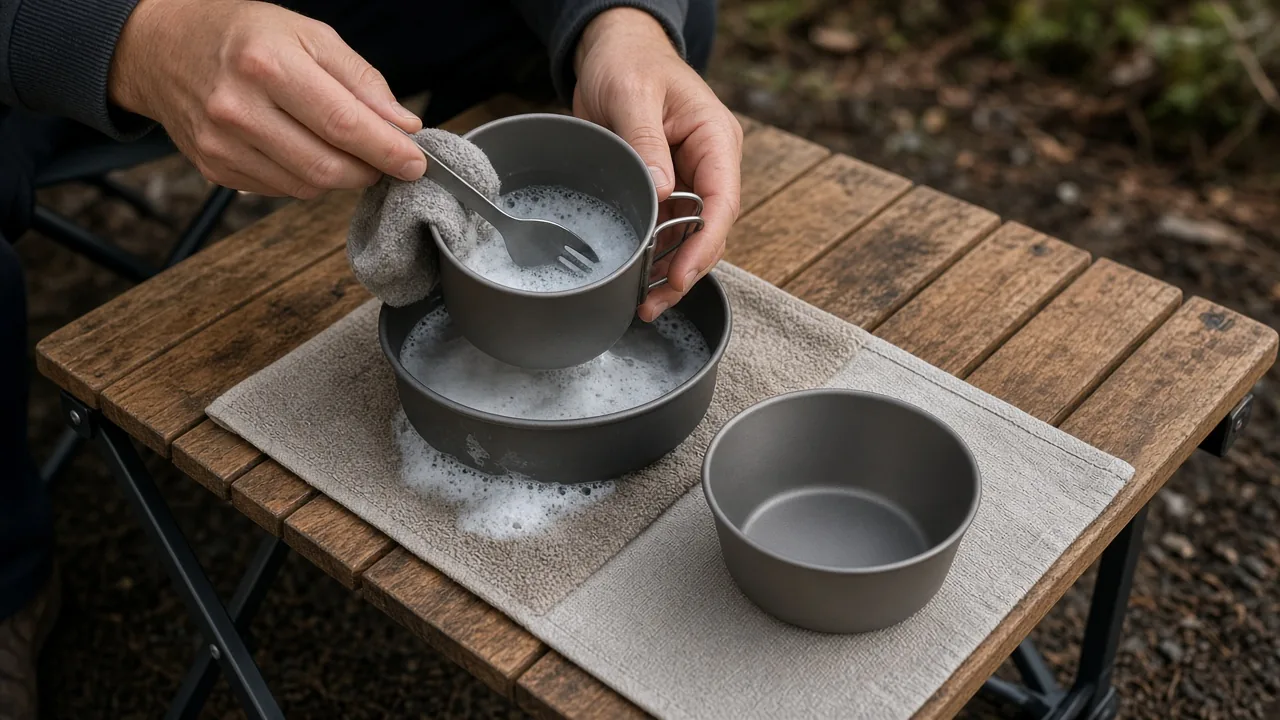
After cooking, let titanium cool gradually on its own. Do not rush the process by pouring cold water over a hot titanium pot or bowl, because rapid cooling can warp thin titanium. Once it is cool, hand-wash with mild soap or wipe it clean with a cloth, then dry it before storage.
If you bring a folding silicone bowl, remember to remove the hook and whistle before putting it in the dishwasher. Check fire restrictions and campground rules before using a camp stove, and store food properly in bear country.
Before you pack titanium, check whether your trip is car camping or backpacking, how cold the nights may get, and whether rain is likely. If you only camp occasionally, spending that money on shelter or insulation may help more than upgrading your fork and spoon.
This article is general information about camping gear, not professional safety, medical, or wilderness training. Check fire restrictions, weather, and campsite rules before you go, and follow the manufacturer's instructions for your own equipment.
FAQ
Are titanium camping utensils worth it for car camping?
For most car campers, no. Since your vehicle carries the weight, stainless steel, aluminum, or folding silicone usually gives better value for the money.
How much weight do titanium utensils save compared with stainless steel?
A 300 ml titanium bowl weighs about 60 grams while a similar stainless steel bowl weighs about 120 grams, roughly half the weight. The savings are most meaningful across a full kit on backpacking trips.
Do titanium camping utensils rust?
No, titanium resists rust well and is a practical choice in wet or humid conditions. Stainless steel can also last years without rusting if dried before storage.
Can you heat-color titanium utensils at home?
Yes, but it is difficult to do evenly. One reviewer burned 20 pieces and was satisfied with only 3, so buying pre-colored titanium or accepting the natural gray finish is usually simpler.
What is the main downside of titanium cookware?
Titanium conducts heat poorly, so rice and starchy foods can scorch easily in titanium pots. Thin titanium can also warp if cooled too quickly.